
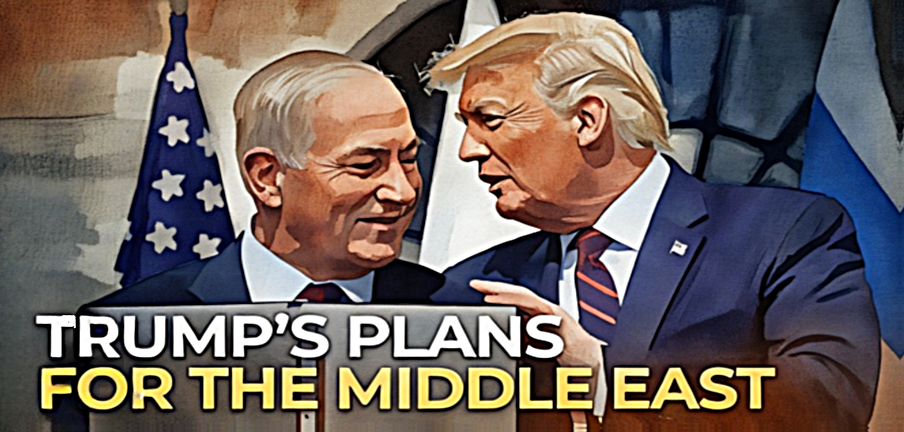
One could claim that President Donald Trump stumbled upon it, that it was not part of his well-thought-out strategic plan for the Middle East, whatever it is; no one can deny that his recent Middle East initiative is a true bright spot for President Trump’s foreign policy.
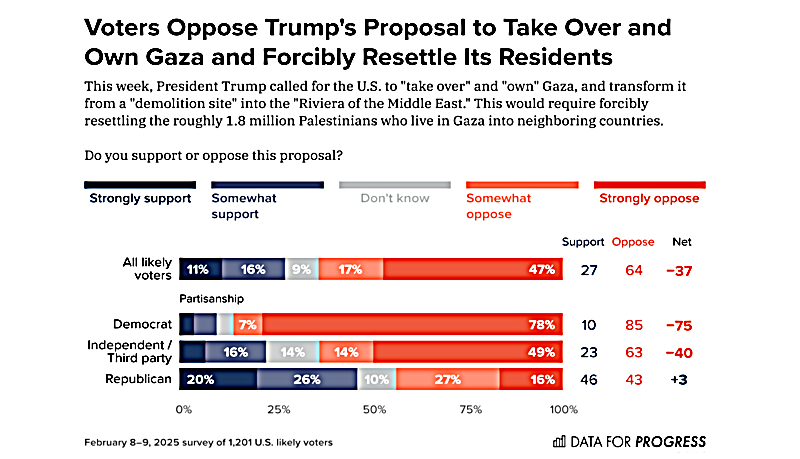
Back in February, President Trump proposed that the United States should “take over” as well as “own” the Gaza Strip, and redevelop it into a “Riviera” of the Middle East tourist resort. His plan called for the 2 million Palestinians living in the Gaza Strip to be relocated to neighboring countries like Egypt and Jordan, they would not be allowed to return, which would be a repeat of the scenario that created the chaos of hate and violence that currently engulfs the Middle East, when the world, through United Nations Resolution 181, decided in 1947 to relocate Palestinians from land they occupied, with no compensation, to create the state of Israel.
The world’s relocation of Palestinians from land to create the state of Israel was the right thing to do in 1947, but the world’s not compensating Palestinians for the land that they were removed from was the wrong thing to do. When President Trump proposed relocating Palestinians last February, it lacked the moral justification the world had for relocating Palestinians in 1947, which was to create an exclusive safe space for the longest suffering group of human beings to experience worldwide hate and discrimination in human history, the people of the Jewish faith, to live in peace and security. Palestinians don’t need to be relocated to live in peace and security; they can have peace and security in Gaza if only both HAMAS and Israel would allow it.
Aside from there being no moral justification to relocate Gaza’s 2 million Palestinians, the relocation plan was announced at a White House press conference with President Trump and Israel’s Prime Minister Benjamin Netanyahu, giving the impression that the relocation plan was at the sole discretion of the United States and Israel, which would be a violation of the rule of international law, since both the state of Israel and the territory designated for the state of Palestine were created by international law through an affirmative vote of United Nations Resolution 181.
Then last June, President Trump’s ability to be a broker for Middle East peace was called into question. When he joined Israel’s unprovoked military attack on Iran by ordering U.S. bomb strikes on 3 nuclear facilities located in Iran. With President Trump’s Gaza relocation plan a possibility, Israel’s Prime Minister Netanyahu vowing to oppose an independent state of Palestine, and President Trump agreeing to Israel’s request for bomb strikes on Iran, both peace and an independent Palestine seemed more like a pipe dream than anything that would ever become a reality.
But just when all hope appeared to be lost for Gaza peace in September, at a White House press conference with Prime Minister Netanyahu, President Trump announced his Gaza 20-point peace plan. The 20 points are:
1) Gaza will be a de-radicalized, terror-free zone that does not pose a threat to its neighbors.
2) Gaza will be redeveloped for the benefit of the people of Gaza, who have suffered more than enough.
3) If both sides agree to this proposal, the war will immediately end. Israeli forces will withdraw to the agreed-upon line to prepare for a hostage release. During this time, all military operations, including aerial and artillery bombardment, will be suspended, and battle lines will remain frozen until conditions are met for the complete staged withdrawal.
4) Within 72 hours of Israel publicly accepting this agreement, all hostages, alive and deceased, will be returned.
5) Once all hostages are released, Israel will release 250 life sentence prisoners plus 1700 Gazans who were detained after October 7, 2023, including all women and children detained in that context. For every Israeli hostage whose remains are released, Israel will release the remains of 15 deceased Gazans.
6) Once all hostages are returned, Hamas members who commit to peaceful co-existence and to decommission their weapons will be given amnesty. Members of Hamas who wish to leave Gaza will be provided safe passage to receiving countries.
7) Upon acceptance of this agreement, full aid will be immediately sent into the Gaza Strip. At a minimum, aid quantities will be consistent with what was included in the January 19, 2025, agreement regarding humanitarian aid, including rehabilitation of infrastructure (water, electricity, sewage), rehabilitation of hospitals and bakeries, and entry of necessary equipment to remove rubble and open roads.
8) Entry of distribution and aid in the Gaza Strip will proceed without interference from the two parties through the United Nations and its agencies, and the Red Crescent, in addition to other international institutions not associated in any manner with either party. Opening the Rafah crossing in both directions will be subject to the same mechanism implemented under the January 19, 2025, agreement.
9) Gaza will be governed under the temporary transitional governance of a technocratic, apolitical Palestinian committee, responsible for delivering the day-to-day running of public services and municipalities for the people in Gaza. This committee will be made up of qualified Palestinians and international experts, with oversight and supervision by a new international transitional body, the “Board of Peace”, which will be headed and chaired by President Donald J. Trump, with other members and heads of State to be announced, including former British Prime Minister Tony Blair. This body will set the framework and handle the funding for the redevelopment of Gaza until such time as the Palestinian Authority has completed its reform program, as outlined in various proposals, including President Trump’s peace plan in 2020 and the Saudi-French proposal, and can securely and effectively take back control of Gaza. This body will call on best international standards to create modern and efficient governance that serves the people of Gaza and is conducive to attracting investment.
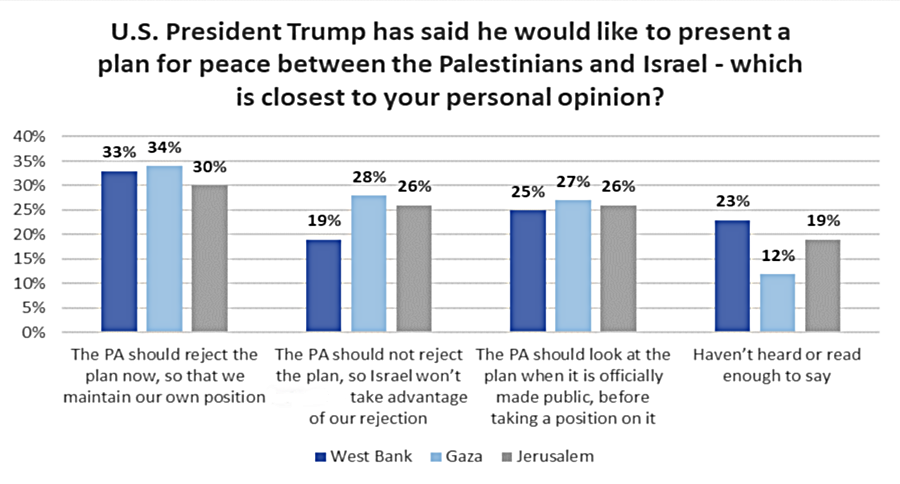
A poll by the Palestine Center for Public Opinion, taken June 27-July 19 indicates that the majority of Palestinians in the West Bank and Gaza oppose their leaderships’ preemptive rejection of the Trump administration’s peace plan—despite widespread popular disapproval of President Trump.
10) A Trump economic development plan to rebuild and energize Gaza will be created by convening a panel of experts who have helped birth some of the thriving modern miracle cities in the Middle East. Many thoughtful investment proposals and exciting development ideas have been crafted by well-meaning international groups, and will be considered to synthesize the security and governance frameworks to attract and facilitate these investments that will create jobs, opportunity, and hope for the future Gaza.
11) A special economic zone will be established with preferred tariff and access rates to be negotiated with participating countries.
12) No one will be forced to leave Gaza, and those who wish to leave will be free to do so and free to return. We will encourage people to stay and offer them the opportunity to build a better Gaza.
13) Hamas and other factions agree to not have any role in the governance of Gaza, directly, indirectly, or in any form. All military, terror, and offensive infrastructure, including tunnels and weapon production facilities, will be destroyed and not rebuilt. There will be a process of demilitarization of Gaza under the supervision of independent monitors, which will include placing weapons permanently beyond use through an agreed process of decommissioning, and supported by an internationally funded buy-back and reintegration program, all verified by the independent monitors. New Gaza will be fully committed to building a prosperous economy and to peaceful coexistence with their neighbors.
14) A guarantee will be provided by regional partners to ensure that Hamas and the factions comply with their obligations and that New Gaza poses no threat to its neighbors or its people.
15) The United States will work with Arab and international partners to develop a temporary International Stabilization Force (ISF) to immediately deploy in Gaza. The ISF will train and provide support to vetted Palestinian police forces in Gaza, and will consult with Jordan and Egypt, who have extensive experience in this field. This force will be the long-term internal security solution. The ISF will work with Israel and Egypt to help secure border areas, along with newly trained Palestinian police forces. It is critical to prevent munitions from entering Gaza and to facilitate the rapid and secure flow of goods to rebuild and revitalize Gaza. A de-confliction mechanism will be agreed upon by the parties.
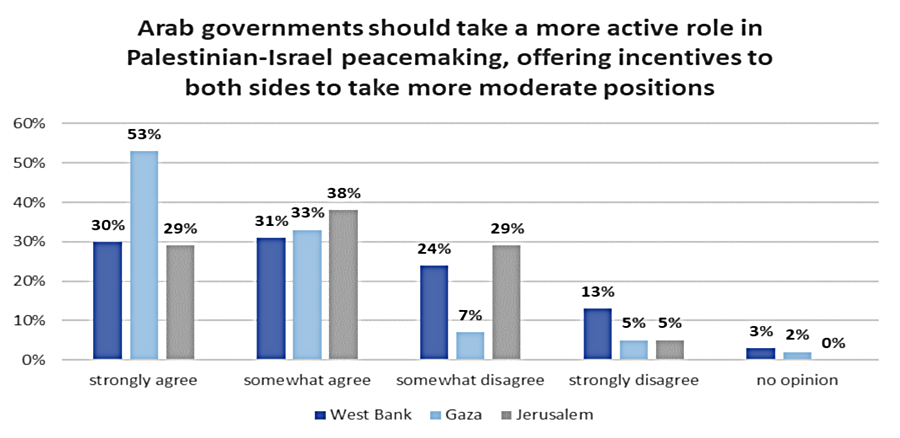
A poll by the Palestine Center for Public Opinion, taken June 27-July 19 shows a dramatic rise in supporting an enhanced role in peacemaking for the Arab states.
16) Israel will not occupy or annex Gaza. As the ISF establishes control and stability, the Israel Defense Forces (IDF) will withdraw based on standards, milestones, and timeframes linked to demilitarization that will be agreed upon between the IDF, ISF, the guarantors, and the United States, with the objective of a secure Gaza that no longer poses a threat to Israel, Egypt, or its citizens. Practically, the IDF will progressively hand over the Gaza territory it occupies to the ISF according to an agreement they will make with the transitional authority until they are withdrawn completely from Gaza, save for a security perimeter presence that will remain until Gaza is properly secure from any resurgent terror threat.
17) In the event Hamas delays or rejects this proposal, the above, including the scaled-up aid operation, will proceed in the terror-free areas handed over from the IDF to the ISF.
18) An interfaith dialogue process will be established based on the values of tolerance and peaceful co-existence to try and change mindsets and narratives of Palestinians and Israelis by emphasizing the benefits that can be derived from peace.
19) While Gaza redevelopment advances and when the PA reform program is faithfully carried out, the conditions may finally be in place for a credible pathway to Palestinian self-determination and statehood, which we recognize as the aspiration of the Palestinian people.
20) The United States will establish a dialogue between Israel and the Palestinians to agree on a political horizon for peaceful and prosperous co-existence.
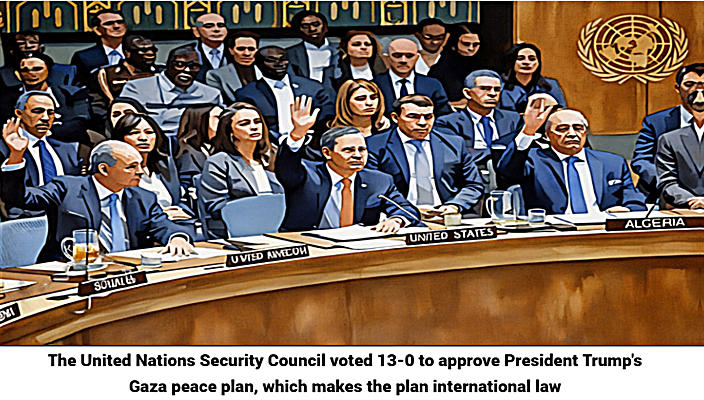
Despite Israeli Prime Minister Netanyahu’s frequently stated goal of denying Palestinians an independent state of Palestine, President Trump’s peace plan lays the groundwork and a path to an independent state of Palestine. It makes Palestinian’s recognized political leadership, the Palestine Liberation Organization (PLO), along with the Muslim states of Saudi Arabia, Jordan, the United Arab Emirates, Indonesia, Pakistan, Turkey, Qatar, and Egypt, a part of the future planning, reconstruction, and governance of Gaza. Point 16 of the peace plan specifically states that Israel will not occupy or annex Gaza. But the most important thing about President Trump’s peace plan is that it was internationally authorized by the United Nations (UN), when its Security Council voted 13-0 for Resolution 2803 (2025).
While some countries have expressed disappointment at the UN Resolution’s “absence of explicit reference to the two-State solution”, the peace plan and the UN’s Security Council’s adoption of it, is a clear reversal of the one-state annex solution Prime Minister Netanyahu had Israel, Gaza, and the West Bank on the path to. Point 9 of the peace plan clearly states “that Gaza will be governed under the temporary transitional governance of a technocratic, apolitical Palestinian committee. The committee will be made up of qualified Palestinians and international experts, with oversight and supervision by a new international transitional body, the “Board of Peace”, which will be headed and chaired by President Donald J. Trump, with other members and heads of State to be announced, including former British Prime Minister Tony Blair”.
In terms of internal and external security, point 15 of the peace plan states that an International Stabilization Force (ISF) composed of forces from Islamic and other countries, excluding Israel, will oversee the demilitarization of HAMAS, provide temporary security in Gaza, and train a new Palestinian police force to provide security in Gaza long-term. Points 9 and 16 alone place Gaza back on the Oslo Accords path to independent statehood, the same path that Netanyahu removed Palestinians from and has worked feverishly for the last 10 years to block and sabotage.
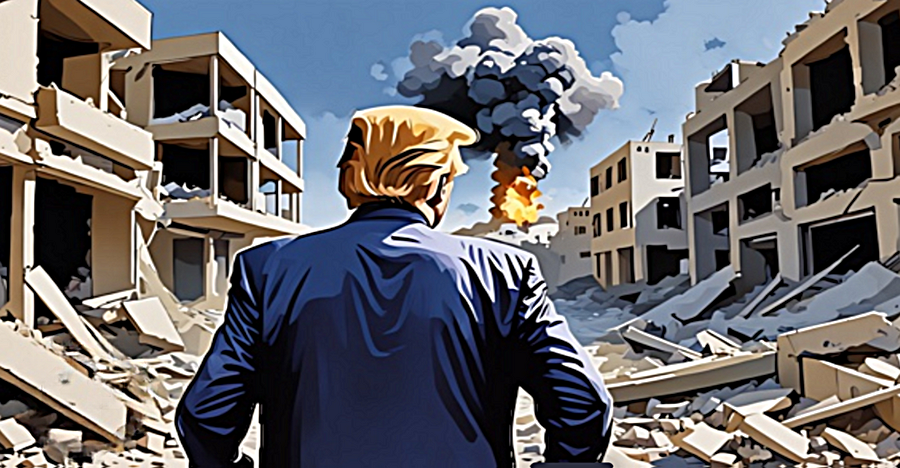
President Trump’s Gaza Peace Plan presents a golden opportunity to remove all the rubble and destruction wrought by Israel’s retaliation to rebuild a Gaza devastated by war
Fortunately, despite his close friendship with Netanyahu, despite the fact that he cut off all foreign aid to the Palestinians, and despite the fact that his first plan for Gaza was to evacuate all Palestinians with no possibility of their return, President Trump has either stumbled upon or strategically developed a true workable plan that provides peace and a path to independence for Gaza. Which means that even if you disagree with President Trump dropping bombs on an Iran that did pose an imminent threat, his lack of support for the Ukraine War, placing high tariffs on goods exported into America, or bombing Venezuelan ships without first verifying that they are transporting drugs. You have to acknowledge that there is one undeniable bright spot in President Trump’s foreign policy, his Gaza Peace Plan!!!