
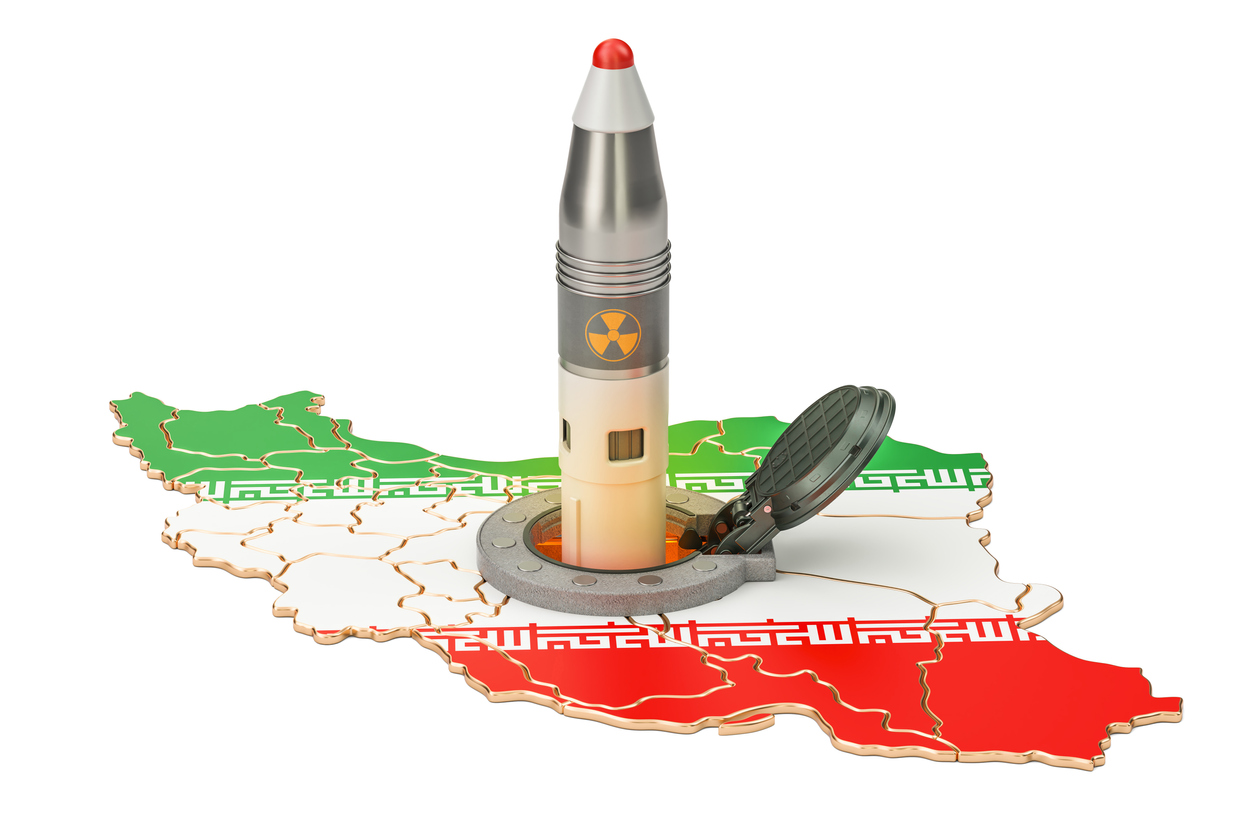
America did it, it dropped the bomb, the big bunker-busting bomb meant to obliterate any vestige of Iran’s ability to build a nuclear bomb. Only time will reveal how much obliteration actually occurred, but truth be told, there is only one way to truly obliterate Iran’s nuclear weapon capability, and it’s not a bomb; it’s God’s free will principle.
As a 5th-generation PK growing up, I constantly heard about the “almighty power” of God. So, as a child, naturally, one of the questions I constantly posed to my preacher-grandfather, my preacher-uncles, and my preacher-cousins was, if God has almighty power, why doesn’t he stop people from doing bad things? The constant answer I got in short form, long form, or through biblical reference was “God grants man free will”.
It took living more life before I could truly understand and appreciate the 2 reasons why God grants human beings free will. First, God can afford to grant humans free will because there is nothing humans can do that will alter, change, or prevent what God has already predetermined will happen. Second, because God knows that since he endowed human beings with the capacity to think, reason, question, and resist, in other words freedom and self-determination, when people are forced to do something they haven’t chosen to do it creates a feeling within people that they are losing their freedom and self-determination, which then activates their natural instinct to always resist losing freedom and self-determination.
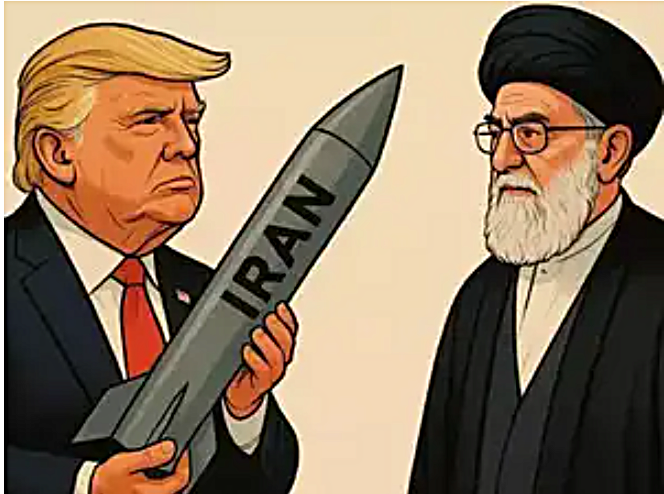
For those who might not appreciate the second reason why God grants humans free will, the saga of Iran’s nuclear weapon pursuit is an illustration of the second reason. In today’s world, where consensus can be hard to achieve, there is a worldwide consensus that Iran cannot be allowed to develop or possess nuclear weapons. Because Iran refuses to officially declare that it will not develop a nuclear weapon, the worldwide consensus falls apart on the best way to prevent or restrict Iran’s nuclear weapon development.
All those who think military force is the best way got a shout-out from President Donald Trump a few weeks ago, when he ordered America’s military to bomb several Iranian nuclear production facilities. Since multiple intelligence assessments disagree on the extent of damage done to Iran’s nuclear weapon capability, but they all seem to agree that Iran’s nuclear weapon capability was not abolished, all those who said military force would not end Iran’s nuclear weapon development are getting a shout-out now.
Technically, Iran has been developing its nuclear capabilities since the 1950s. Back then, Iran had the blessings of the United States because it limited itself to developing nuclear capabilities for building power reactors that would produce electricity, and the Iranian government was autocratically ruled by an American ally, the Shah of Iran. By 1989, the Iranian government was autocratically ruled by extremist Islamic clerics who are self-declared enemies of the United States, who refer to America as “the great satan”, and who had started the AMAD Project (AMAD) intending to develop nuclear weapons.
In late 2003, after America had militarily invaded and replaced the government of Iraq, Iran’s next-door neighbor, earlier in the year to capture and destroy nuclear weapons that Iraq turned out not to have, Iran probably fearing the same fate as Iraq and reacting to international concern from Britain, France, and Germany (EU-3) about Iran’s nuclear weapon intentions, declared that it was ending the AMAD Project and that its future nuclear development would be for peaceful purposes. Iran pledged to suspend all uranium enrichment, allow more intrusive inspections by the International Atomic Energy Agency (IAEA), and reveal all its past nuclear work. The EU-3 breathed a sigh of relief because they believed they had forced Iran to end its nuclear weapons pursuit.
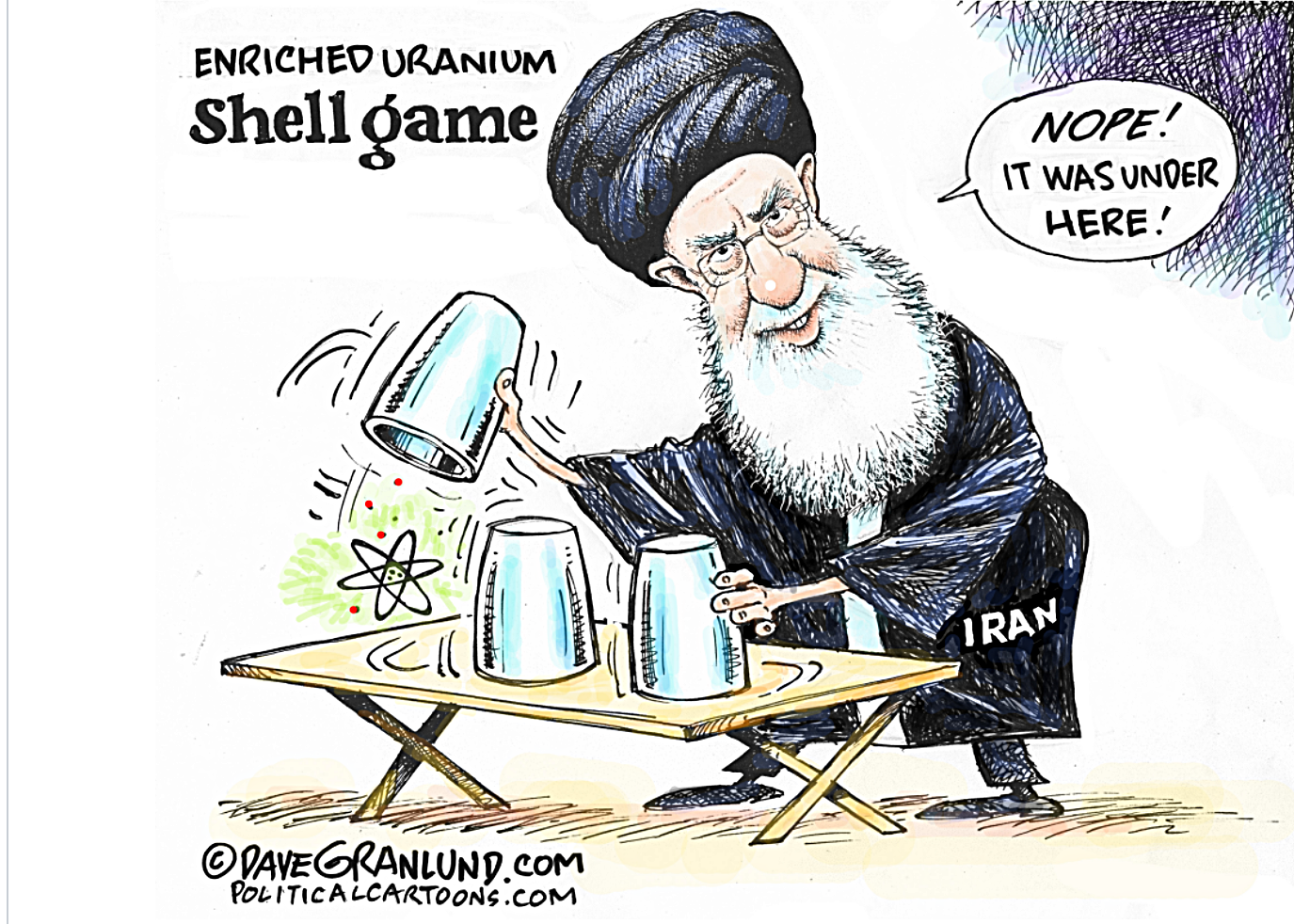
Since Iran ended the AMAD Project because it felt forced to do so, and not because it voluntarily decided to do so, nothing could have been further from the truth. Over the next 10 years, with assistance at various times from China and Russia, Iran’s nuclear weapons pursuit continued in secret. In 2006, Iran announced that by using 164 centrifuges at its Natanz Nuclear Facility, one of the 3 Iranian nuclear facilities America bombed a few weeks ago, it had enriched uranium (U-235) to 3.5%, the low-enriched uranium commonly used to fuel nuclear power plants that generate electricity. Even though uranium enriched to 3.5% is nowhere near enough enrichment to produce a nuclear weapon, the fact that Iran could enrich uranium to any degree raised a huge red flag to the world community.
It raised such a red flag to China and Russia that they ended their nuclear assistance to Iran, and joined the U.S., Britain, France, and Germany, forming the P5+1, in diplomatic negotiations to persuade Iran to stop all its enrichment of uranium. By 2009, not only were the diplomatic negotiations not working, but it was discovered that Iran had built a second nuclear enrichment facility, Fordow, deep inside a mountain, and this time, unlike the Natanz facility, Iran did not report its existence to the IAEA. In 2010, since negotiations weren’t working, the U.S. was able to initiate the Stuxnet cyber-attack, a computer worm that severely damaged the centrifuges Iran was using to enrich uranium.
America’s covert Stuxnet cyber-attack and the assassination of Iranian nuclear scientists by Israel, between 2010 and 2012, only slowed Iran’s nuclear weapon development; it did not end it, because Stuxnet-damaged centrifuges can be rebuilt, and assassinated nuclear scientists can be replaced by new nuclear scientists. Proof that the cyber-attack and assassinations only slowed Iran’s nuclear weapon development emerged the following year in 2013, when spy intelligence discovered that Iran had installed over 18,000 centrifuges at Natanz and Fordow and possessed 370 kg of 20% medium-enriched uranium, which was almost enough, if further enriched to weapons-grade, for one nuclear bomb. This signaled to the world that Iran’s breakout time to produce bomb-grade uranium for a weapon had shrunk to only a matter of a few months.
In other words, for 10 years, the world thought that by imposing economic sanctions on Iran, covertly destroying the centrifuges Iran used to enrich uranium, and assassinating Iran’s nuclear scientists, it would force Iran, in opposition to Iran’s free will decision to do so, to dismantle and end Iran’s nuclear weapon pursuit. Except in reality, for those 10 years, Iran’s nuclear weapon development continued all along in secret because Iran had not made a free will decision to stop enriching uranium. But the economic sanctions the world enforced on Iran did have a slow, protracted over time effect because it was less force and more inducement, a major difference.
To threaten Iran with a bomb strike on its nuclear facilities, to covertly insert a computer worm that destroys Iran’s nuclear centrifuges, or to assassinate Iran’s nuclear scientists because Iran continues to enrich uranium, is equivalent to pointing a gun at Iran and saying Stop enrichment or I will pull the trigger. To say to Iran that as a sovereign nation you are free to decide to enrich uranium but if you decide too, the rest of the world’s sovereign nations will freely decide not to export any of their goods to Iran or buy any of Iran’s oil, is equivalent to saying to Iran it has the freedom-choice to enrich uranium and the rest of the world has the freedom-choice not to engage with or do business with Iran because it has chosen to enrich uranium. Do this or die is an applied force that leaves no choice because we all want to continue to live, do this or suffer the consequences leaves a free will choice, even if the choice is choosing between bad or worse than bad.
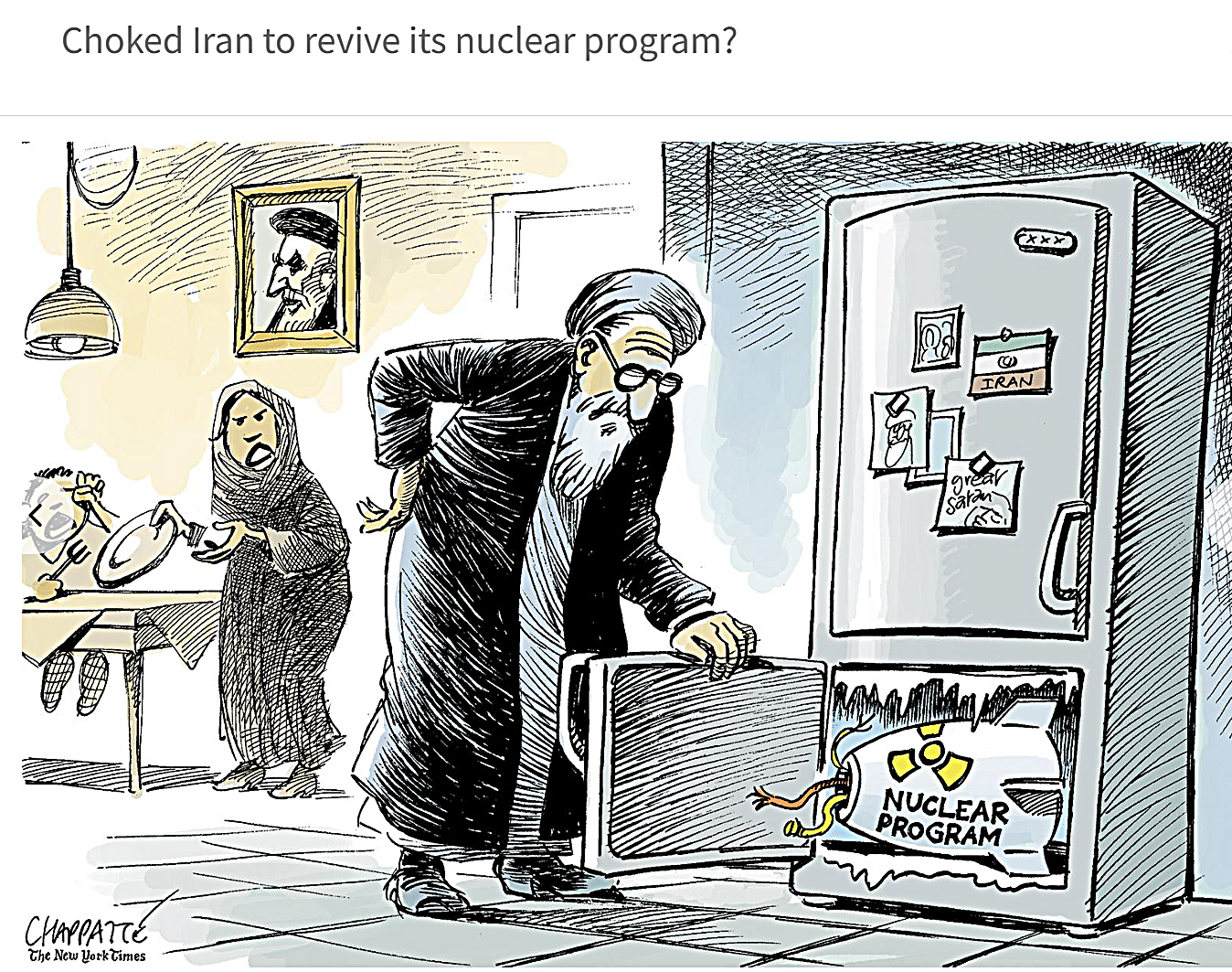
Beginning in 2006-2013, the world enforced many escalating economic sanctions on Iran, and over time, they took a toll on the Iranian people’s standard of living. The sanctions changed Iran’s ethos of secretly defying, by any means necessary, any force the world would apply to prevent Iran from enriching uranium, to an ethos of freely deciding that successfully secretly exercising their right to enrich uranium was not worth the economic cost to Iranian society. So in 2013, Iranians elected Hassan Rouhani, a former nuclear negotiator whose campaign platform was ending economic sanctions through diplomatic negotiations, as President of Iran.
The negotiations started with an immediate interim agreement between Iran and the P5+1, the Joint Plan of Action, in which Iran made the free will decision to stop all enrichment of uranium above 5%, dispose of its stockpile of 20% enriched uranium, suspend centrifuge installations, and not to operate the Arak heavy-water reactor. Iran’s free will decision, by inducement not by force, to not enrich uranium above 5% was the first time, after 10 years of the world trying unsuccessfully to end Iran’s secret uranium enrichment program by force, that all secret efforts truly ceased in Iran to enrich uranium above 5%. In return, Iran received access to $4.2 billion of the many billions of Iranian assets that had been frozen by the world.
Negotiations for the final deal continued for 20 months. Finally, on July 14, 2015, the Joint Comprehensive Plan of Action (JCPOA) was agreed to by Iran and the P5+1. As part of the agreement, Iran made a free will decision:
- Not to enrich uranium above 3.67% for 15 years
- Limit the stockpile of enriched uranium to 300 kg
- Dismantle 13,000 centrifuges used to enrich uranium
- Limit Iran to having 5,060 first-generation uranium centrifuges
- Repurpose the Fordow enrichment facility for non-enrichment nuclear research
- Redesign and rebuild the Arak IR-40 reactor to eliminate its plutonium production capability
- Implement the IAEA Additional Protocol, and accept enhanced verification, including continuous surveillance of enrichment and conversion facilities, monitoring of uranium mines and mills, and oversight of centrifuge manufacturing
- Ship abroad or down-blend all of Iran’s 20% enriched uranium
6 months later, January 16, 2016, was “Implementation Day”, the day Iran was expected to have completed all the tasks necessary to comply with the JCPOA, and the IAEA verified that Iran had complied. For the next 2 years and 4 months, Iran consistently abided by its free will decision, doing everything required, according to the IAEA and multiple European intelligence sources, to comply with the JCPOA. Unfortunately, Iran’s 100% fealty to the JCPOA agreement was not sufficient; on May 8, 2018, President Donald Trump illogically withdrew the United States from the JCPOA agreement. Had he not done so, the JCPOA agreement would still be in effect today, meaning the bombs America dropped a few weeks ago would not have had to happen, because there wouldn’t have been any centrifuges or uranium enriched above 3.67% to bomb!!!
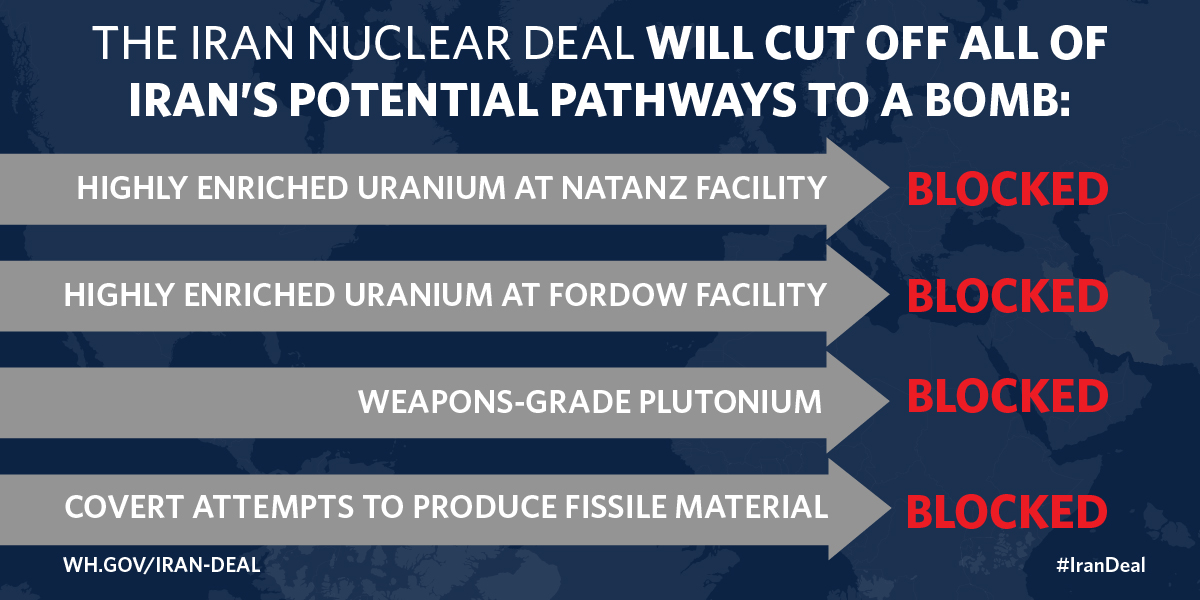
This is what President Trump walked away from when he withdrew America from the JCPOA
Apparently the European Union (EU) thought President Trump’s withdrawal was unjustified because just 9 days later, May 17, 2018, it took the rare step of implementing a blocking statute, which declared that any US sanctions that were reinstated against Iran because America withdrew from the JCPOA were null and void in Europe, banning European citizens and companies from complying with the sanctions.
One could logically assume that proof that the EU was right about Iran and that President Trump was wrong about Iran, is the fact that it took Iran’s nuclear program 7 years from the day President Trump withdrew from the JCPOA til now, to rebuild its nuclear program back to where it was when Iran negotiated the JCPOA with former President Barack Obama in 2015, in 2015 Iran was within a year of having enough highly enriched uranium for a nuclear weapon. Meaning Iran’s nuclear weapon program had to start from scratch when President Trump withdrew from the JCPOA, meaning Iran was definitely in compliance with the JCPOA and hiding no secret centrifuges and no secret highly-enriched uranium.
Even though America illogically withdrew from the JCPOA, Iran remained in it for precisely one more year until May 8, 2019. May 8th is the date America withdrew from the JCPOA in 2018, with President Trump proclaiming Iran could not be trusted to abide by the terms of the JCPOA, and that he had a better way to force Iran to shut down its nuclear enrichment. Maybe as a way of saying Iran’s nuclear weapon program can’t be shut down by force, only by Iran’s free will decision to do so, Iran announced on May 8, 2019, that it was withdrawing from compliance with the JCPOA. One month later, in July, the IAEA reported that Iran had breached both the 300 kg enriched uranium stockpile limit and the 3.67% refinement limit.
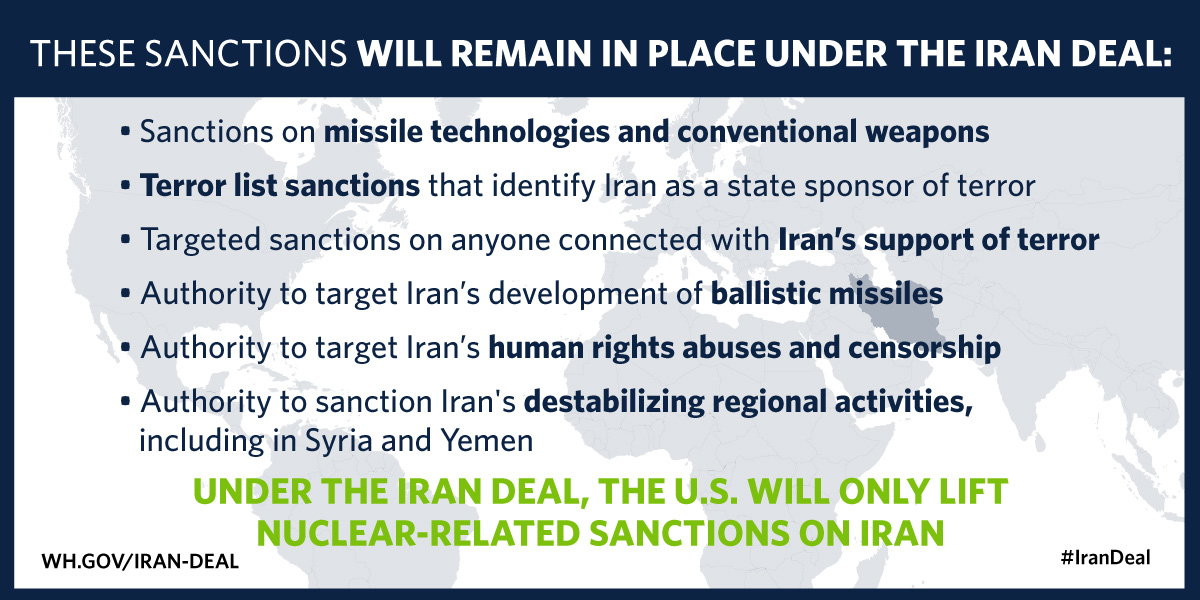
Contrary to what Israel falsely claimed the JCPOA agreement did not remove these sanctions against Iran
Fast forward to April 2025, President Trump’s personal negotiator Steve Witkoff and Iranian Foreign Minister Abbas Araghchi held 2 rounds of talks, which led to a 3rd expert-level round to develop a technical framework for a possible new nuclear agreement. On May 27, President Trump said he is “very close to a solution” for a new nuclear agreement with Iran. On May 31, the IAEA announced that Iran has enough uranium enriched to a near-weapons-grade level to make several nuclear weapons. On June 13, Israel launched a surprise attack war with Iran, Operation Rising Lion, killing many of Iran’s military leaders, nuclear scientists, and influential politician Ali Shamkhani, a lead negotiator in the nuclear agreement talks with the United States and a close advisor to Iran’s Supreme Leader Ali Khamenei.
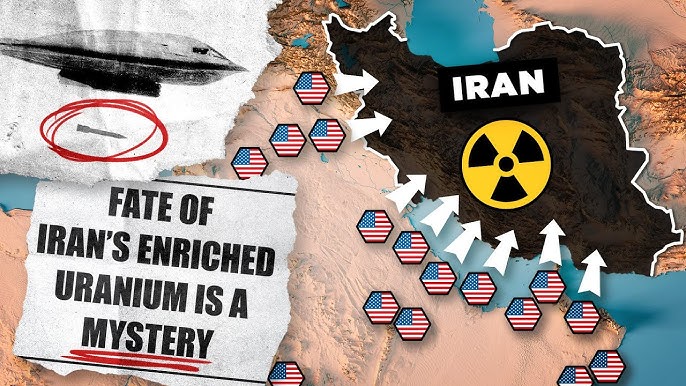
On June 21, President Trump disregarded the fact that he was in the middle of sincere negotiations with Iran over limiting its nuclear program, and he agreed to Israel’s plea to join Israel’s war against Iran by dropping U.S. bombs on Iran’s Fordow Fuel Enrichment Plant, the Natanz Nuclear Facility, and the Isfahan nuclear technology center. The next day, President Trump proclaimed, “Iran’s key nuclear enrichment facilities have been completely and totally obliterated”. Admittedly, it was hard for President Trump, as it would be for any other Democrat or Republican President, to resist greenlighting bomb strikes in Iran that he thought would obliterate Iran’s nuclear weapon capability while having a 99% chance of no casualties to America’s military.
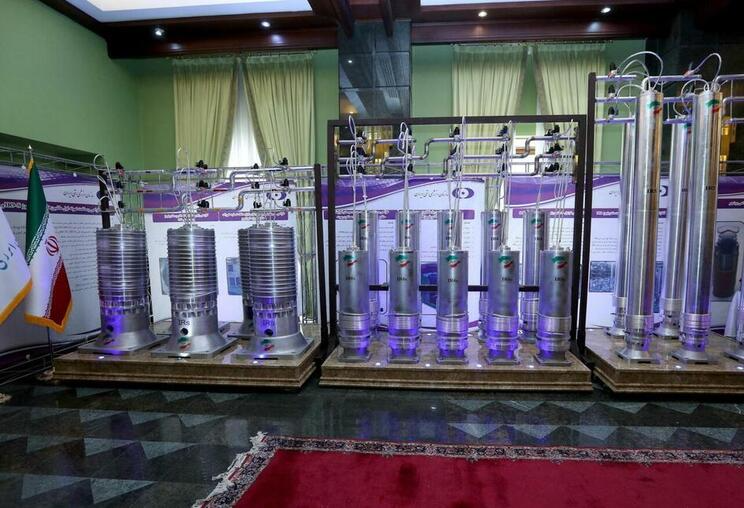
A number of new generation Iranian centrifuges are seen on display during Iran’s National Nuclear Energy Day in Tehran, Iran April 10, 2021 after President Trump withdrew from the JCPOA © Iranian Presidency Office/WANA/Handout via REUTERS
But unfortunately, the Arms Control Association said it best: “The U.S. decision to join Israel’s strikes on Iran’s safeguarded nuclear facilities while negotiations on a nuclear agreement were ongoing dealt a serious blow to U.S. efforts to constrain Iran’s nuclear program. The premature use of force set back Iran’s nuclear program temporarily, but risks pushing Tehran closer to nuclear weapons in the long term. The U.S. strikes also complicate the diplomatic efforts that are still necessary to reach an effective, verifiable nuclear deal”.
Aside from the fact that Iran has demonstrated that it will defy all attempts to end or limit its nuclear program by force, bombing Iran’s nuclear facilities overlooks the fact that while you can bomb and destroy the fruits of Iran’s nuclear enrichment labor, you cannot bomb and destroy Iran’s knowledge of how to enrich uranium to weapons grade degree. There is only one true way to prevent Iran from using its knowledge of how to enrich uranium to an atomic bomb degree. Iran would have to make a free will decision not to use its nuclear knowledge to enrich uranium to an atomic bomb degree.
This has been proven by the nation of South Africa, whose nuclear program developed and possessed 6 nuclear bombs, but fearing nuclear bomb proliferation throughout the rest of Africa, in 1989 became the first and only nation in world history to voluntarily give up all the nuclear arms it had developed itself. The IAEA verified in 1994 that South Africa dismantled 6 nuclear bombs and an additional one that had been under construction. South Africa, a nation that possesses the proven nuclear knowledge and the financial ability to develop nuclear weapons, has made the free will decision not to. As a result, South Africa has been a nuke-free nation and one less nuclear threat to the rest of the world for the last 36 years.
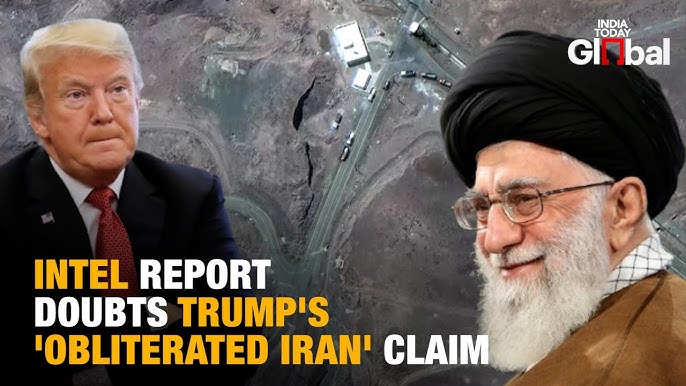
Iran’s military response to America’s bombs was, as President Trump said, “weak”, so much so that he thanked Iran “for giving us early notice, which made it possible for no lives to be lost, and nobody to be injured”. But Iran’s non-military response was strong, defiant, and lethal to world peace. On July 2nd, Iran’s President Masoud Pezeshkian signed a law, passed by Iran’s parliament, suspending cooperation with the IAEA. Two days later, the nuclear watchdog pulled its nuclear inspectors out of Iran, taking with them the last and only way to monitor Iran’s nuclear program.
After the bomb strikes, President Trump said then and continues to say today, Iran cannot be allowed to enrich uranium, and that he is willing to resume nuclear negotiations with Iran, but doesn’t feel it necessary because the bomb strikes “obliterated” Iran’s nuclear facilities. In other words, he believes that negotiations are no longer necessary because Iran’s nuclear program has been shut down by force. Iran says their right to enrich uranium will not be shut down by force, and it will only resume nuclear negotiations with America if America and Israel guarantee no further military actions against Iran.
The shutdown-Iran ‘s-nuclear-program-by-force history is in the process of repeating itself once again. Iran’s nuclear program will now descend into secrecy and reemerge months or years later, like in the past, stronger than it was before, and posing a more lethal threat to world peace than it was before it descended into 2025 secrecy.
The only time in the 36-year history of Iran’s nuclear program that Iran ceased to enrich, or attempt to enrich, uranium to bomb-grade potential, the only time the world could sleep at night worry-free over Iran’s nuclear weapon capability, were the 3 years and 4 months, January 16, 2016 – May 8, 2019, that Iran made the free will decision to agree and submit to the terms of the JCPOA. Military force, no matter how powerful, will never stop Iran from enriching uranium to an atomic grade; military force will only delay Iran’s ability to enrich uranium. The only way Iran will ever cease to pursue nuclear weapon capability is if Iran is allowed by the world to do the same thing Iran was allowed to do through the JCPOA, make an Iranian free-will decision to do so!!!