
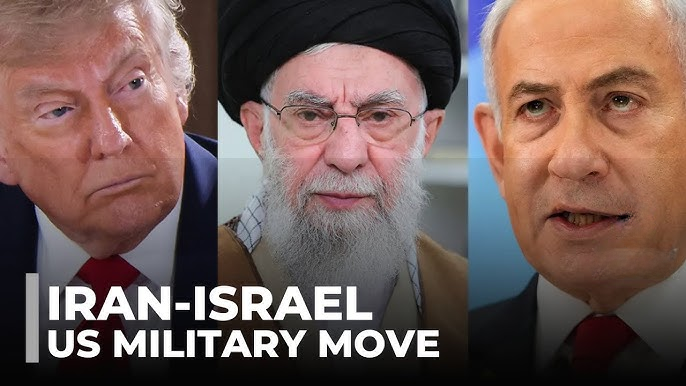
As events play out in the war between Israel and Iran, there are many different opinions on whether or not America should be directly involved. Now that America has dropped some bombs and become directly involved, many are asking what America’s direct involvement should be. As President Donald Trump, his advisers, the U.S. House and Senate, and political pundits of all stripes ponder America’s war involvement, they all must remember that old wine in a new bottle won’t make the wine new.
There were good arguments for either President Trump ordering a bunker-buster bomb strike on Iran’s heavily fortified nuclear facility or not ordering it. Hopefully, in the weeks ahead, enough facts will emerge that will validate President Trump’s decision to order it. But on the question of whether or not the United States should assist in Israel’s quest for regime change in Iran. The answer is as simple as the fact that old wine in a new bottle won’t make the wine new or different. America has not only seen this Iran regime change picture before, but America wrote, directed, and produced the original Iran regime change picture!!!
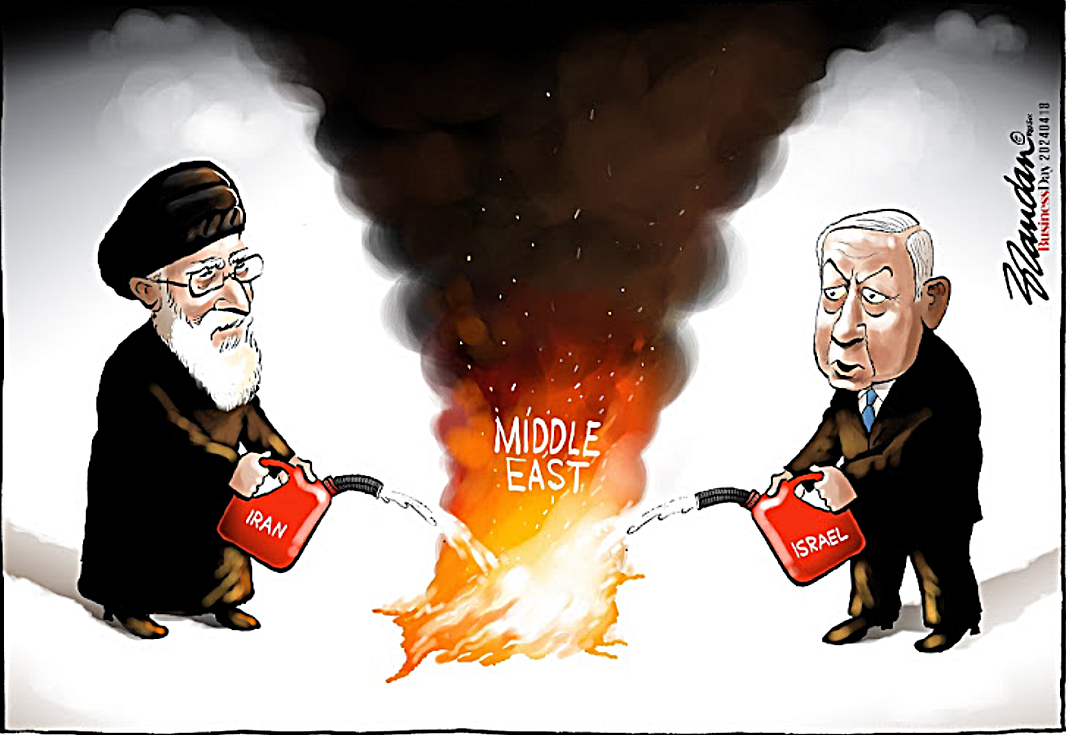
In 1953 another Prime Minister with deep close ties to America, Great Britain’s Winston Churchill, asked President Dwight Eisenhower to intervene in Britain’s war with Iran, just as now in 2025 Israel’s Prime Minister, Benjamin Netanyahu, is asking President Trump to intervene in Israel’s offensive war that it started with Iran. There were only 2 nuance differences, Britain’s war with Iran was over oil, not nuclear weapons and when Britain was asking for war help America and Iran were on good terms with each other, as opposed to now in 2025 when relations between America and Iran are 1 step below being officially at war with each other.
Beginning in 1909, the British government-owned Oil Company, known today as British Petroleum (BP), known then as the Anglo-Iranian Oil Company (AIOC), owned and controlled all the oil in Iran, the country’s only natural economic resource. It was the classic 16th, 17th, 18th, 19th, and 20th-century example of an economically and militarily powerful European country raping a less developed non-European country for its natural resources, and sharing none or very little of the benefits the resource produces with the less developed country. AIOC refused to consider having a similar arrangement that American oil companies had with the government of Saudi Arabia, where several American oil companies and the government of Saudi Arabia jointly owned Arabian American Oil Co. (Aramco), and 50% of all oil revenue profits were returned to Saudi Arabia.
In 1947, the British government’s AIOC had an after-tax oil revenue profit of $112 million (equivalent to $1.3 billion in 2025), and the Iranian government’s share of the $112 million was a measly $9.4 million (equivalent to $116 million in 2025). On March 15, 1951, after years of failing to get the British government to renegotiate a fairer profit-sharing deal, the Iranian parliament (Majlis) passed a law to nationalize AIOC, seize its assets, and rename them the National Iranian Oil Company (NIOC), forming a new oil company owned 100% by the Iranian government. Great Britain immediately declared economic war on Iran by successfully organizing a worldwide boycott that prevented Iran from selling any of its valuable oil, which greatly increased the poverty already existing throughout Iran.
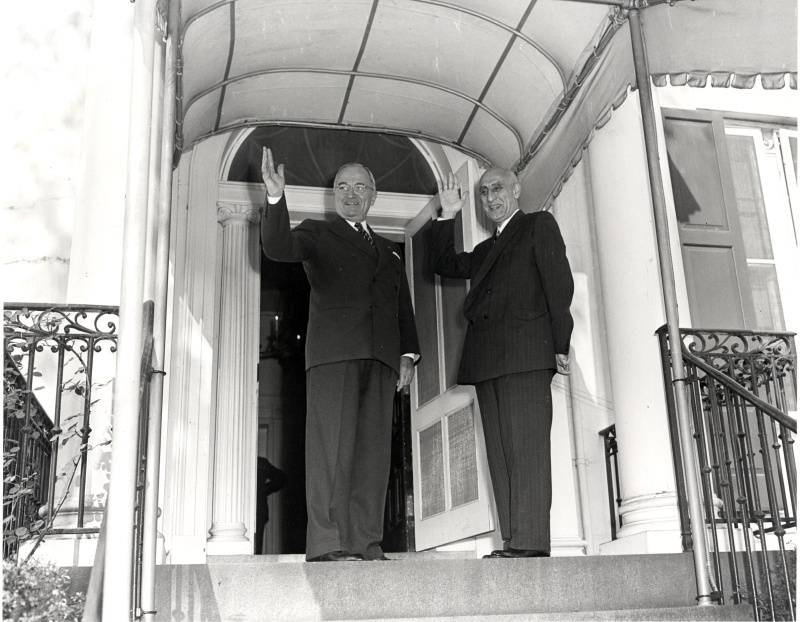
President Harry S. Truman (left) and Prime Minister Mohammed Mossadegh of Iran (right) wave from the front steps of Blair House in 1951 when Prime Minister Mossadegh traveled to the United States seeking oil war help and economic aid for Iran
Contrary to the 2025 state of affairs between the United States and Iran, in 1951, America and Iran considered each other friends. So in October 1951, Iran’s then-Prime Minister Mohammed Mossadegh traveled to Washington to meet with President Harry Truman. In the meeting, Mossadegh not only asked Truman for help resolving the oil war with Britain, but he also stated that even if the oil war was resolved on favorable economic terms for Iran, it would not be enough to eliminate Iran’s economic difficulties. He asked Truman if America would give Iran the same type of economic aid that America was giving through its Marshall Plan to European nations.
Truman replied by saying he considered both Iran and Britain friends of America, that America had no preference concerning the profit-sharing terms, and that America’s main concern was that its 2 friends, Britain and Iran, come to an oil agreement so that the possibility of Russia having access to Iran’s oil and enabling it to start a world war is eliminated. He assured Mossadegh that once the oil issue with Britain was resolved, America would be happy to talk about economic aid for Iran. Since Iran would not compromise on not letting Britain control its oil resources, the oil war continued for another year, which was also the final year of Harry Truman’s term as President.
11 days before Dwight Eisenhower was sworn in as President, Mossadegh reached out to Eisenhower to repeat Iran’s pleas for oil war help and economic aid. Eisenhower replied, without making any commitment, months later in May, when Mossadegh reached out again, President Eisenhower responded by expressing concern for the welfare of the Iranian people but denied Iran’s request for economic aid. Eisenhower also suggested that Iran seek the mediation of a “neutral international body” to resolve its oil war with Britain. In other words, President Eisenhower’s sentiment was that since Britain isn’t getting Iran’s oil, Iran isn’t getting America’s economic aid. What President Eisenhower didn’t tell Mossadegh is that he agreed to grant Prime Minister Churchill’s request that America do what Britain could not, a coup d’état or “regime change” to remove Mossadegh from Iran’s government by force.
3 months later, on August 19, 1953, under the direction of Roosevelt family scion Kermit Roosevelt Jr., the CIA successfully launched Operation Ajax and removed Mossadegh from government, allowing Britain to regain control of Iran’s oil. Even though Britain was the country that requested regime change and Britain was the country that directly benefited from Iran’s regime change, it was the United States that became the Iranian people’s mortal enemy, not Great Britain!!! Because they knew only America possessed and used the necessary wherewithal to make Iran’s regime change happen. 16 years later, on January 16, 1979, the Iranian people revolted and forced the leader America and Britain chose to replace Mossadegh, Mohammad Reza Pahlavi, known as the Shah of Iran, into exile. Months later, the Iranian people’s next target was an invasion and takeover of the American Embassy, not the British Embassy. On November 4, 1979, 66 Americans were taken hostage, 52 of them were not released until over a year later, on January 20, 1981.
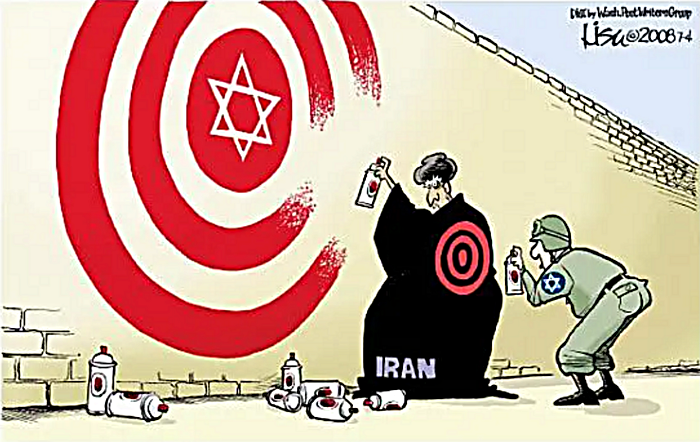
Because of the friendly relations that existed between the American government and the Saudi Arabian government in 1953 and now, and unlike British oil companies, American oil companies had a more equitable formula for sharing oil profits with Saudi Arabia, strategically in 1953 America did not need Iran’s oil for America’s national security, and because 21st century fracking technology has unleashed discoveries of new huge oil deposits in the United States, it’s unlikely America will ever need any oil from Iran for national security purposes. However in 1953 because Great Britain said to the United States that there needed to be regime change in Iran, so it could regain control of Iranian oil it desperately needed for its national security, America broke trust with Iran and acquiesced Britain by executing regime change in Iran, and in the process converted Iran from being a friend to America into a new die-hard American enemy, that laid in wait for 16 years to extract its violent revenge for Iran’s regime change, not on Great Britain but on the United States of America.
Now, in 2025, the old 1953 Iran regime change wine has been placed in a new do-it-for-the-sake of Israel’s national security, bottle. Israel’s Prime Minister Benjamin Netanyahu is asking President Trump to do what Israel can’t do alone. Unlike Britain in 1953, Israel itself can perform the assassination act that creates regime change in Iran, and based on the success Israel has had assassinating Iranian generals and scientist it’s obvious that Israel has human spies on the ground in Iran, which means Israel probably has identified a potential new leader for Iran that’s acceptable to Israel, but Israel lacks the resources needed to perform the assassination act and lacks the resources to protect itself against the potential lethal Iranian response.
Bottom line, just as was the case in 1953, Iran’s regime change in 2025 can’t happen without an American green light, and all Iranians in 2025, just as was the case in 1953, are well aware of this fact. Iran regime change wine in the new do-it-for-the-sake of Israel’s national security bottle will look the same, will feel the same, will have the same bitter taste, and will leave the same resentful after taste blamed on America in 2025 as the do-it-for-the-sake of Great Britain’s national security Iran regime change wine did in 1953.
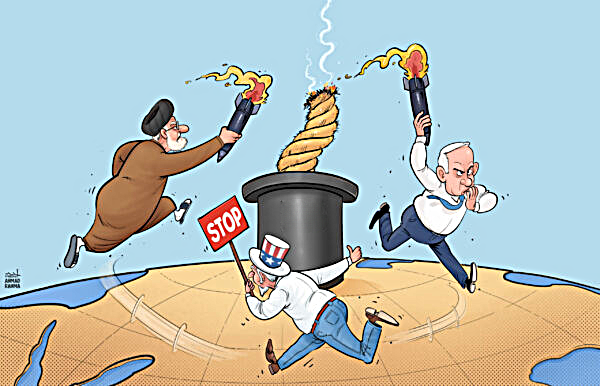
It’s a good thing for America to assist Israel in attempting to eliminate an ability the entire world agrees needs to be eliminated, the ability of Iran to build a nuclear bomb. But as the 1953 Iran regime change demonstrated, it’s a bad thing for America to assist Israel in attempting to choose a leader for Iran that Israel deems acceptable. Because future revolutionary Iranians who are equipped with the knowledge of how to build a nuclear bomb, a knowledge that bomb strikes can’t erase or destroy, will blame America, not Israel, for having to endure another government the Iranian people did not choose.
Like in 1979 when Iranian revolutionaries disposed of the Iranian government acceptable to Great Britain, their next target was America, not Britain. Once future Iranian revolutionaries, equipped with nuclear knowledge, dispose of the Iranian government, acceptable to Israel, their next target will be America, not Israel. Unfortunately, it’s a safe bet that, unlike the 1979 Iranian revolutionaries, the future nuclear-knowledge Iranian revolutionaries won’t limit themselves to just invading an American embassy and holding 52 Americans hostage for a year.
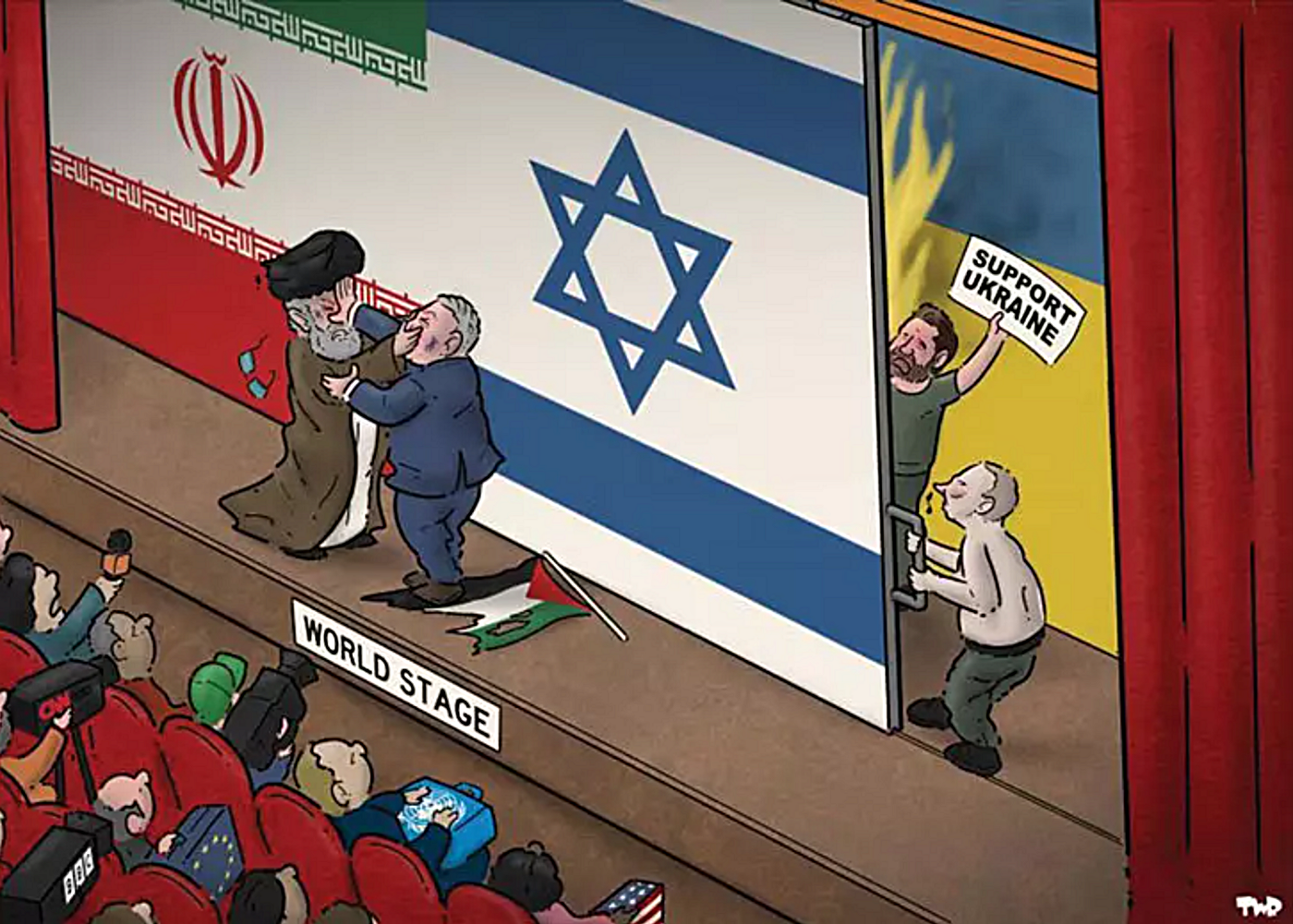
Today’s reality is even if Iran could build a nuclear bomb the threat would be to Israel not America, just as North Korea’s nuclear threat is to South Korea not America, because North Korea lacks the missile technology to deliver a nuclear bomb to America, if Iran had a nuclear bomb today it does not have the missile technology to deliver it to America. Nothing should ever limit America’s iron-clad commitment to assist in the defense of Israel, but the only time America should put itself directly in a line of fire that’s not directed at America, which is what would happen if America greenlights regime change in Iran, is to protect America and no other nation!!!