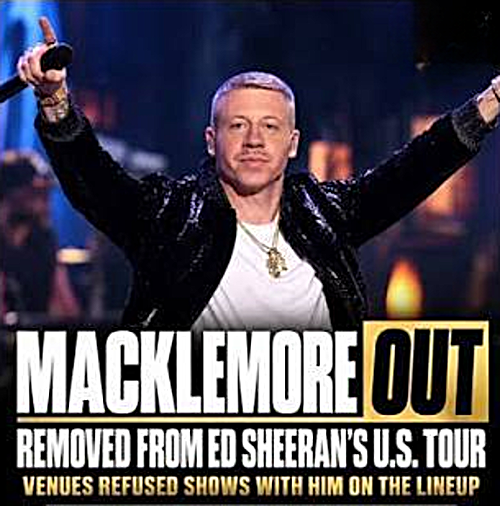
Whether you think New England Patriots owner Robert Kraft was right or wrong for banning rapper Macklemore from performing as pop singer Ed Sheeran’s opening act, or whether the 6 other NFL team owners who followed Kraft’s lead are right or wrong, only Kraft and one other team owner had the constitutional right to ban Macklemore; the remaining 5 team owners are constitutional lawbreakers!!!
A routine part of rapper Macklemore’s concert performance is to highlight and use the phrase “Free Palestine” in the same breath after using the phrase; Macklemore will also say, “To my Jewish brothers and sisters, I love you, I see you, and I stand with you. I stand against antisemitism in all forms—but I also stand against the weaponization of antisemitism to justify the genocide of the Palestinian people”, or “This has nothing to do with our Jewish brothers and sisters. This is about a government, not a religion. We are against the bombing of children, not against Jewish people”, and at a concert this month at MetLife Stadium he said, “I want to say this to all of my Jewish brothers and sisters. Criticism of Israel, criticism of apartheid, being against genocide in no way is a criticism of you”.
Robert Kraft apparently does not trust either of the bridge-building words Macklemore says after using the “Free Palestine” phrase because, in 2014, for a Seattle concert, Macklemore dressed up in what many considered an anti-Semitic Jewish costume. In response to the costume backlash, Macklemore said his only aim was to disguise himself, “so that I could walk around unnoticed and surprise the crowd with a short performance”, not to be “any type of person,” he said. “I wasn’t attempting to mimic any culture, nor resemble one. A ‘Jewish stereotype’ never crossed my mind.” At the time, the Anti-Defamation League said the group would “take him at his word that he did not have any ill intent”.
According to Ed Sheeran, Kraft not only informed him that he would not be allowed to perform at Gillette Stadium with Macklemore as the opening act, but that other NFL stadiums would not allow Sheeran to perform with Macklemore as the opening act. The other stadium venues are Lincoln Financial Field (Philadelphia), Lucas Oil Stadium (Indianapolis), Bank of America Stadium (Charlotte), AT&T Stadium (Dallas), Raymond James Stadium (Tampa Bay), and Mercedes-Benz Stadium (Atlanta).
Regardless of whether you think Kraft was wrong or right, or that he is a free-speech denier, Kraft was constitutionally correct when he chose to ban Macklemore from Gillette Stadium. The same does not apply to 5 of the 6 other NFL owners who joined Kraft in the Macklemore ban; 1 of the 6, like Kraft, was constitutionally correct; the other 5 are First Amendment free-speech deniers. Bank of America Stadium is owned by the North Carolina Panthers team owner, David Tepper, just as Gillette Stadium is owned by Kraft. Both Kraft and Tepper not only own their stadiums, but the construction of both stadiums was also privately financed by Kraft and Tepper with no taxpayer funds.
The same can’t be said for Carlie Irsay-Gordon and the Indianapolis Colts; Lucas Oil Stadium is owned by the Indiana Stadium and Convention Building Authority; Jerry Jones and the Dallas Cowboys; AT&T Stadium is owned by the City of Arlington, Texas, the Glazer family, and the Tampa Bay Buccaneers; Raymond James Stadium is owned by Hillsborough County, Florida, Arthur Blank and the Atlanta Falcons; the Georgia World Congress Authority owns Mercedes-Benz Stadium, and Jeffrey Lurie and the Philadelphia Eagles; Lincoln Financial Field is owned by the City of Philadelphia.
When Kraft and Tepper banned Macklemore from their stadiums, they were exercising the same constitutional right that gives them the right to ban Macklemore from their homes. Since they own their stadiums, they have the constitutional right to dictate what happens on their private property. When Irsay-Gordon, Jones, Glazer, Blank, and Lurie ban Macklemore from their stadiums, they are denying Macklemore fans whose taxes paid for the stadiums, and who are or might not be offended by Macklemore’s support for Palestine, their constitutional right to see Macklemore perform in the government-owned facility their tax dollars paid for.
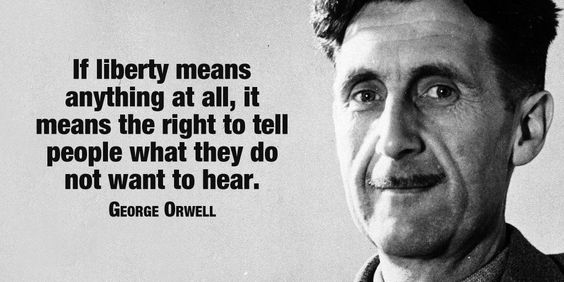
Since Irsay-Gordon, Jones, Glazer, Blank, and Lurie don’t own their stadiums, they don’t have a constitutional right, like Kraft and Tepper do, to pick and choose what happens in the government-owned facilities they lease and manage based on their personal politics or religion. The only constitutional justification they could have for denying access to a free-speech performer, at a government-owned facility they lease or manage, is if the performer incites violence or lawbreaking. A performer who offends the politics or religion of Irsay-Gordon, Jones, Glazer, Blank, and Lurie’s can never be the justification for denial of access to the government-owned venues they lease and manage, because the same performance that offends them can be a pleasure to a taxpayer.
Free speech in America means even hate speech is constitutionally protected speech in government-owned facilities. The Supreme Court said it best in Matal v. Tam; the Court ruled unanimously that the government cannot ban expression merely because it is offensive. In the ruling, Justice Samuel Alito wrote: “The proudest boast of our free speech jurisprudence is that we protect the freedom to express ‘the thought that we hate. Speech that demeans on the basis of race, ethnicity, gender, religion, age, disability, or any other similar ground is hateful; but the proudest boast of our free speech jurisprudence is that we protect the freedom to express ‘the thought that we hate”.
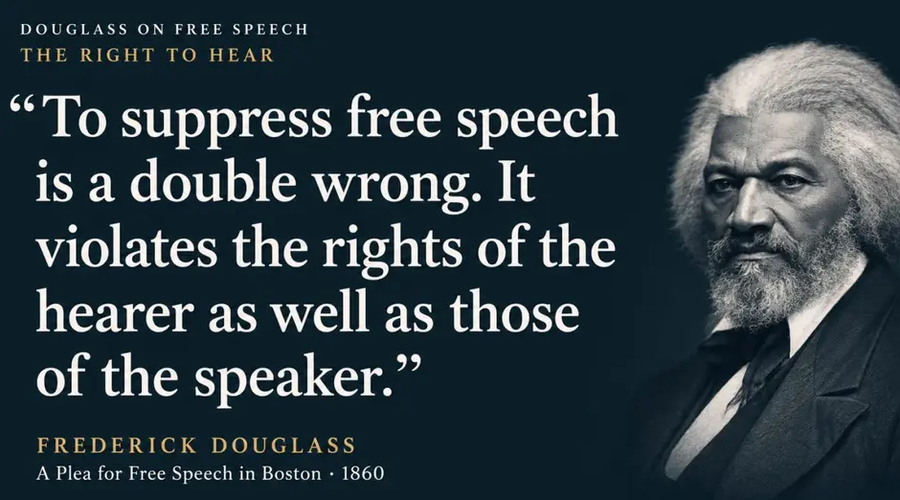
Obviously, Irsay-Gordon, Jones, Glazer, Blank, and Lurie need to be reminded about what having First Amendment free speech in America truly means. So instead of the Free Palestine protest that took place at Lurie’s Lincoln Financial Field last Saturday night, during the upcoming Sheeran concerts at Irsay-Gordon’s government-owned Lucas Oil Stadium, Jerry Jones’s government-owned AT&T Stadium, the Glazer Family’s government-owned Raymond James Stadium, and Arthur Blank’s government-owned Mercedes-Benz Stadium, maybe protesters should stage a Free Government-Owned Facilities from free-speech censorship protest!!!