
Racial discrimination has come full circle in Florida. Florida Republicans, led by Gov. Ron DeSantis, have drawn severe criticism from across the country for creating a law that requires schools to teach that slavery was beneficial to American Blacks, because slavery taught them labor skills. Now, as if they have caught the same virus, Florida Democrats are attempting to commit racial discrimination themselves.
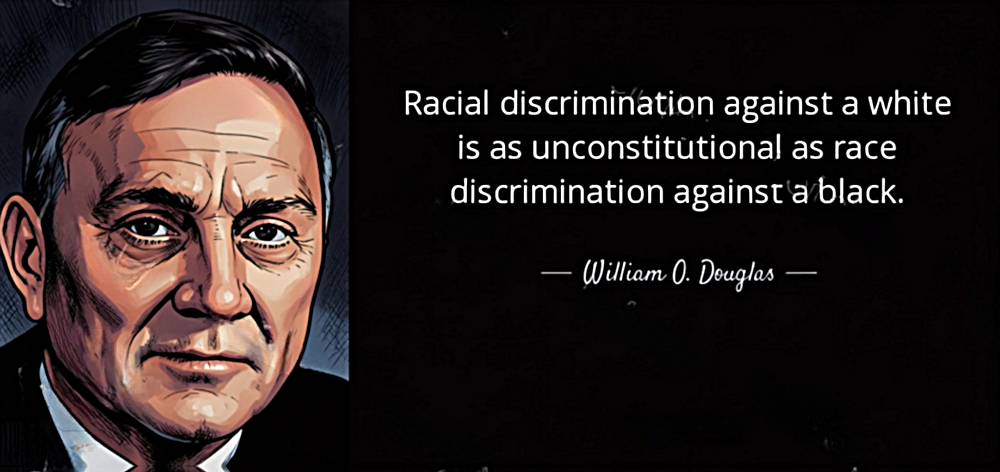
The undemocratic and racially discriminatory impact of a politically biased decision reached by the U.S. Supreme Court in Louisiana v. Callais was immediate and far-reaching. The case was filed by a group of Louisiana voters who described themselves as “non-African American”; they contended that the Louisiana State Legislature had racially discriminated against them by creating a congressional election district that a non-white person could win. In a 6-3 verdict, the Supreme Court ruled that Louisiana’s redistricting map, which created a second majority-minority election district in a state where American Blacks are more than 30% of the population, was an unconstitutional racial gerrymander under the Fifteenth Amendment, which states, The right of citizens of the United States to vote shall not be denied or abridged by the United States or by any State on account of race, color, or previous condition of servitude.
In response to the court’s decision, 9 states, Alabama, Louisiana, Tennessee, Florida, Missouri, North Carolina, Ohio, Texas, and Utah, have all either enacted new congressional maps or are moving to change their 2026 election districts. Several other states, like Georgia, are making election district changes that will affect the 2028 elections. All the changes states are making share the same characteristic: changing a majority-minority election district to a majority-majority election district under the guise of a political-party gerrymander.
In other words, changing an election district from one likely to vote Democrat to one likely to vote Republican, which is legal now because the Supreme Court decided in the 2019 case Rucho v. Common Cause that it could not make decisions on the legality of political partisan gerrymandering. In other words, since MAGA Republicans have converted the Republican Party into the American Whites-only political party, in post-Jim Crow America, the 21st-century way to deny American Blacks an electoral voice is not by unconstitutional racial gerrymandering, but by constitutional political-party-affiliation gerrymandering. The anti-democracy destruction of majority-minority election districts that the Supreme Court has set in motion can’t go unchallenged, but neither can how some Florida Democratic Party members are responding to the state of Florida’s political partisan gerrymandering.
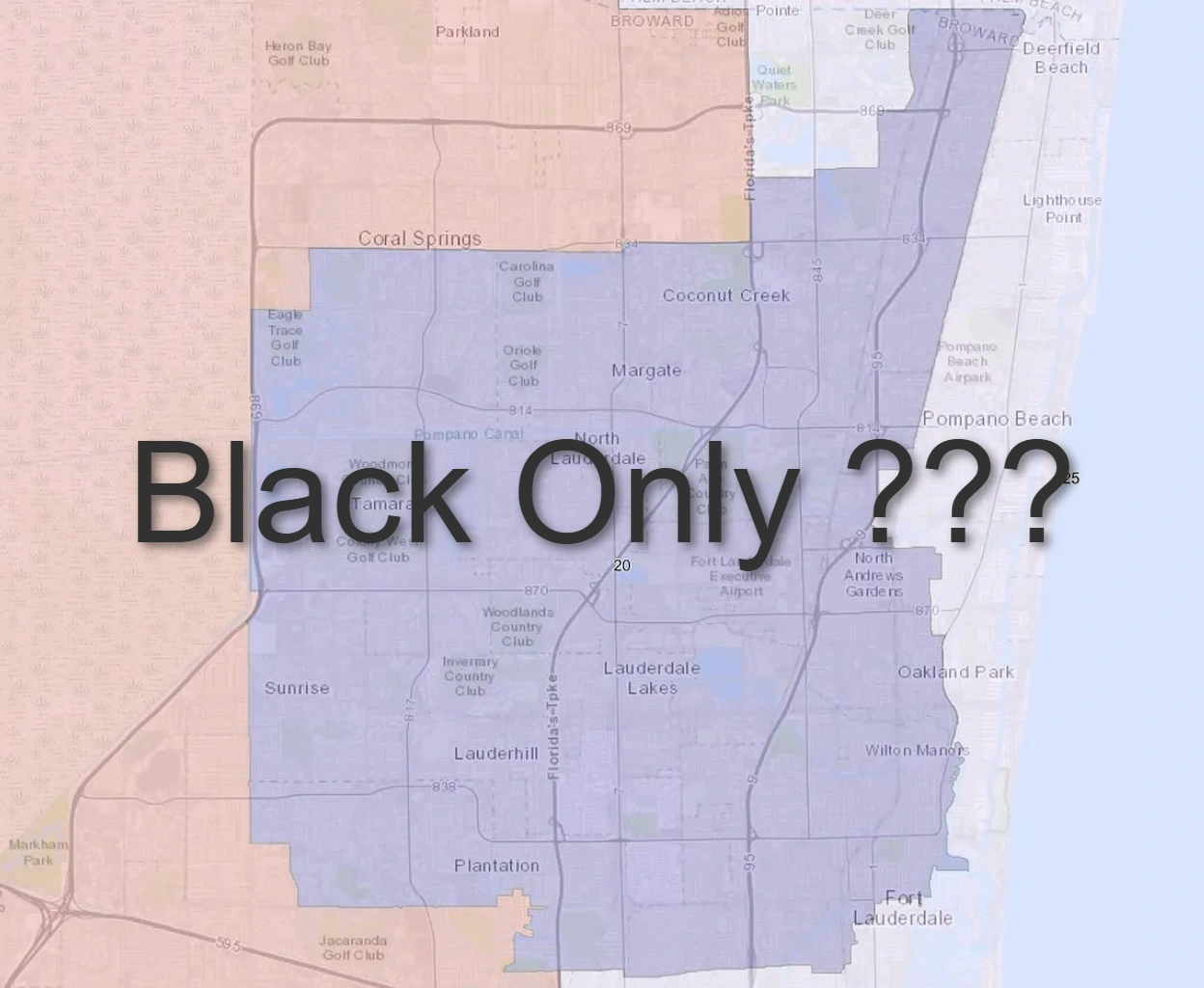
Within hours of the Supreme Court’s Louisiana v. Callais decision, Florida’s Republican-controlled state legislature politically gerrymandered 4 Congressional Districts (CDs), flipping them from likely to vote Democratic to likely to vote Republican. CD 25, currently held by Democrat Congresswoman Debbie Wasserman Schultz, was one of the CDs that was redrawn from Democratic to likely Republican. Instead of running for reelection in CD 25, Congresswoman Schultz has decided to run for reelection in CD 20, which remains a majority-minority election district. Whether Schultz should run for reelection in CD 20 is a decision that she should make; whether Schultz is unfairly denying a fellow Democrat an opportunity by running in CD 20 is a decision for Florida Democrats to make, and whether Schultz is the best person to represent a majority-minority district is a decision for CD 20 voters to make.
But unfortunately, there’s a decision being considered among some Florida Democrats that’s totally unacceptable for anyone to be making in 2026. Pondering whether it’s appropriate or asserting that it’s inappropriate for Schultz to run as a candidate in CD 20, or represent CD 20 voters in Congress, because CD 20 traditionally has been represented by an American Black and Schultz happens to be an American White, is an unacceptable step backwards for civil and human relations in America.
There was a time in 20th-century America, the 1960s, 70s, 80s, and 90s, when American society, white and black, needed to see and literally experience both American Blacks being elected to public office and American Blacks wielding the power of public office, because for 188 years before the 1960s Civil Rights Movement, it was ingrained in the laws, traditions, religions, and economy of American society that American Blacks were sub-human therefore unfit to be elected and unable to wield public power properly. Now in 21st-century America, America has experienced American Blacks being successfully elected to and prudently wielding the power of the two highest public offices, President and Vice President of the United States.
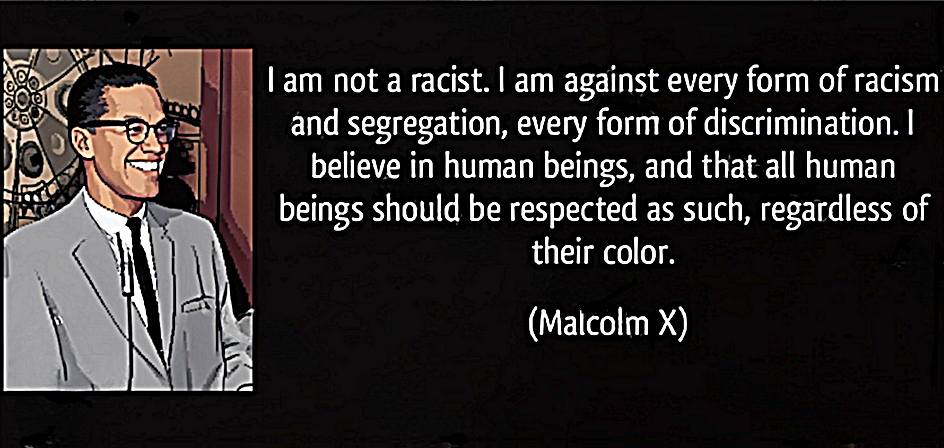
Indeed, a goal of the Civil Rights Movement and Martin Luther King Jr.’s Beloved Community is for American Blacks to have the right to vote for other American Blacks; but the ultimate goal is for American Blacks to have the right to vote for people, regardless of their race, who think like them. The ultimate goal of creating the majority-minority election districts of the 1965 Voting Rights Act is to create majority-minority election districts that give American Black voters a fair chance of electing anyone, black or white, male or female, faith believer or non-faith believer, gay or not, Democrat, non-MAGA Republican, or Independent, who represents and reflects their collective culture, values, viewpoint, and voice on public issues and policies.
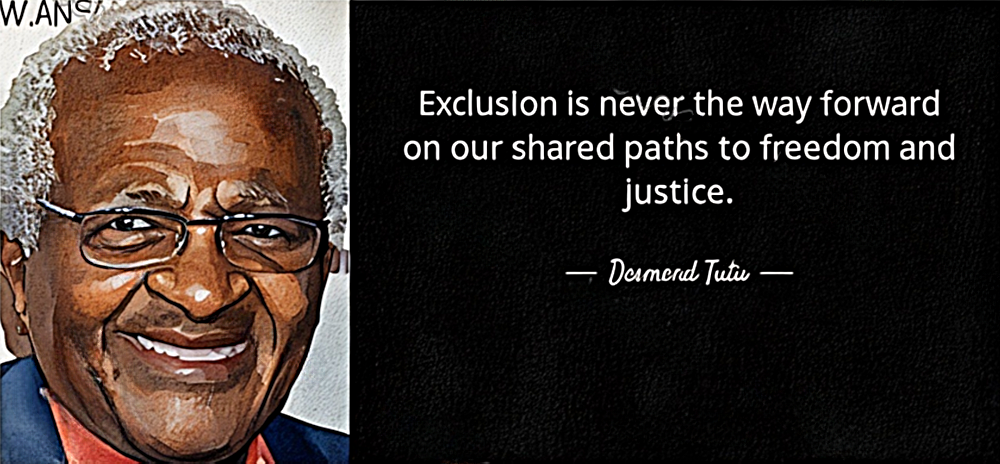
One does not have to have the lived experience of being an American Black person to advocate for public policies that require citizens to be judged by the content of their character, and not by the color of their skin. One does not have to be a female public official to support or not support a woman’s right to an abortion. Declaring that any elective position in America is the sole province of any race, gender, religion, or sexual orientation to occupy turns the clock back on, creating Dr. King’s Beloved Community. This is reminiscent of Dr. King’s refusal, amid great criticism, to use the once popular phrase “Black Power” because, according to him, its use had “connotations of violence and separatism”.
The Voting Rights Act is meant to not only prevent racial vote suppression and racial political representation suppression, it’s also meant to prevent ethnic and cultural vote suppression, which is why the state of Alaska, where hardly any American Blacks live, was one of the nine states covered by the Voting Rights Act’s Section 5 preclearance, before it was ruled unconstitutional by the Supreme Court in 2013. Section 5 protected the voting rights of native Alaskans from abuse by the now population majority of Americans, who moved to Alaska after it became America’s 49th state in 1959. Diversity of race serving in elected positions throughout America is a definite goal of the Voting Rights Act, the Civil Rights Movement, and Dr. King’s Beloved Community.
But as Kansas City, Missouri, with a racial population of 56% American White, 25% American Black, 12% American Latino, 3% American Asian, and is currently being governed by its 3rd American Black Mayor. Chicago, Illinois, with a racial population of 32% American White, 29% American Latino, 27% American Black, 7% American Asian, and is currently governed by its 4th American Black Mayor. The state of Iowa, which has had 4 of its cities elect an American Black Mayor, when American Blacks are only 4% of Iowa’s state population.
And Memphis, Tennessee’s 9th Congressional District (CD), which was Tennessee’s only majority-black CD for 46 years until Tennessee’s state legislature politically gerrymandered it to vote Republican last month, but for the last 19 years of the 46, this 60% American Black, mostly Christian CD has been represented in Congress by an American White male of the Jewish faith, all prove, that when citizens are voting for people who think like they do versus for people who look like they do, diversity of race, faith, gender, and sexual orientation in elective office will take care of itself.
What the Supreme Court has unjustly legally blessed, and the MAGA state legislatures are undemocratically carrying out, is a dagger but not a death knell to the heart of American democracy. American Blacks still retain the right to vote, so when MAGA legislatures break up majority black districts, they must still place those American Black votes in other election districts, where, if those new black votes are cast in large enough numbers in the new districts, for the people who think like American Blacks do, those votes can influence the outcome in the new voting districts just as they have influenced the outcome in the old majority black districts.
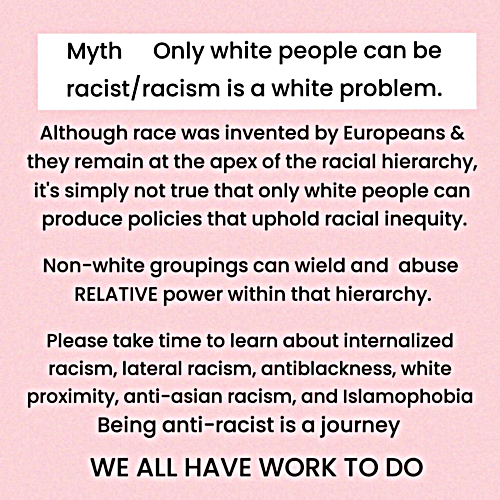
The discriminatory destruction of majority-minority election districts committed by MAGA Republican state legislatures, which has been legally blessed by a MAGA-biased Supreme Court, is wrong, but so is designating any elective office as “American Black only”. To paraphrase Dr. King, the darkness of designating any elective office as “American Black only” can never drive out the darkness of any MAGA gerrymandered “Republican only” elective office. Only the light of the freedom and right to choose who to vote for, and the light of vigorously exercising the right to vote in every election and in every race of the election, can drive out the MAGA gerrymandering darkness.


Leave a Reply