
Too big to fail is an economic theory asserting that certain corporations—primarily large financial institutions—are so deeply integrated into the economy that their collapse would trigger a catastrophic financial crisis. America is now facing a similar too-big-to-fail scenario that, unfortunately, has far greater ramifications than the failures of financial institutions.
The term “too big to fail” first came into use when former Congressman Stewart McKinney, now deceased, used it in 1984 during a Congressional hearing to justify why the Federal Deposit Insurance Corporation needed to intervene to bail out the Continental Illinois Bank. Too big to fail came back to prominence again amid the 2008 financial crisis when America suffered its greatest financial failure since the 1929-1939 Great Depression, and the federal government, through the Troubled Asset Relief Program, bailed out America’s largest banks like Citigroup, Bank of America, Wells Fargo, and JPMorgan Chase because their failure would mean a collapse of the entire financial sector in the United States.
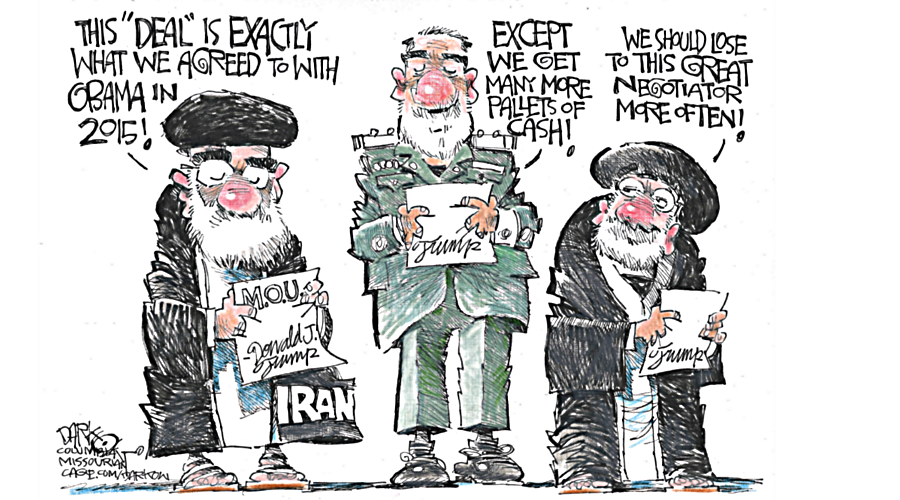
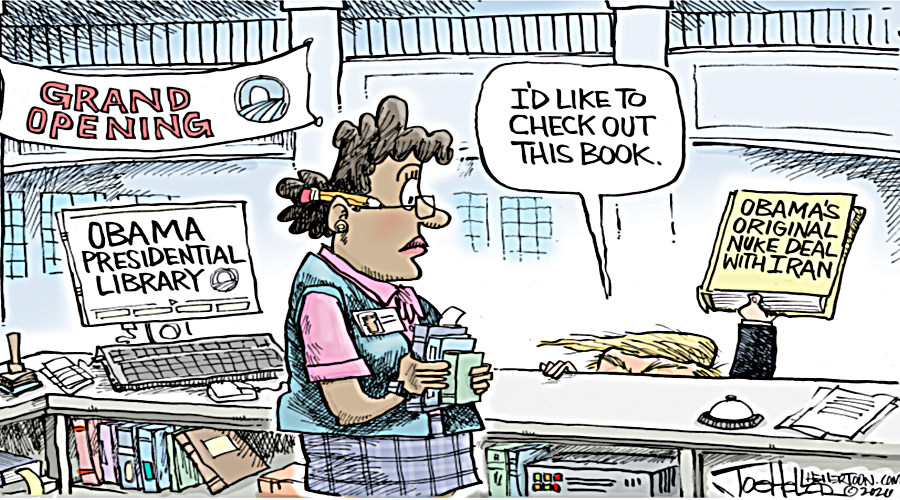
Now, due solely to the fault of President Donald Trump, the United States currently has a slightly different too-big-to-fail scenario: it’s the too-big-to-fail-in-not-ending-it scenario. The first step to creating America’s current too-big-to-fail-in-not-ending-it scenario occurred during President Trump’s first term when he stupidly withdrew America from the Joint Comprehensive Plan of Action (JCPOA), also known as the Iran nuclear deal.
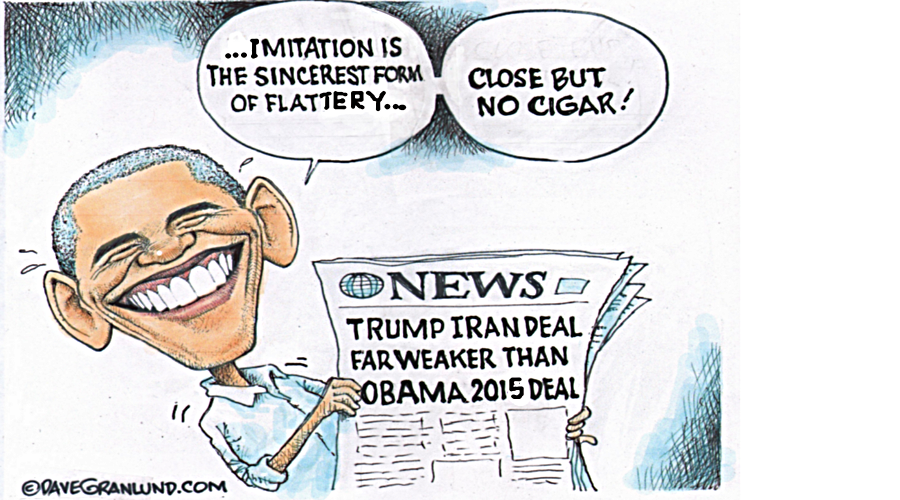
The JCPOA was an ironclad agreement that prevented Iran from developing a nuclear weapon. Iran, China, France, Russia, Britain, the United States, Germany, and the European Union were all signatories to it; the key provisions of the JCPOA were:
- Uranium Enrichment Limits: Iran was restricted to enriching uranium to 3.67%, far below the 90% required for weapons-grade material, capped the number of first-generation centrifuges to 6,104 for 10 years, and prohibited all advanced centrifuges for 15 years
- No Plutonium Production: Iran agreed to redesign its Arak heavy-water reactor to prevent the production of weapons-grade plutonium, and Iran agreed that all stored plutonium and spent fuel would be shipped out of the country to Russia.
- No Nuclear Weaponization Research: Iran agreed to prohibitions on R&D related to nuclear explosive modeling, multi-point detonation systems, and uranium metallurgy.
- Breakout Time Extension: The agreement extended Iran’s “breakout time”—the time needed to produce enough fissile material for one nuclear weapon—from a few months to at least one year.
- Enhanced Monitoring: The International Atomic Energy Agency (IAEA) was given 24-hour access to use sophisticated monitoring technology, such as fiber-optic equipment seals that could send the IAEA information; satellite imagery to detect covert sites; sensors to detect minute nuclear specimens; and tamper- and radiation-resistant cameras for visual surveillance, electronic monitoring, and unannounced inspection visits, including monitoring uranium mines and manufacturing facilities to verify Iran’s compliance. And through the Additional Protocol, the IAEA was provided with monitoring access to Iran’s nuclear facilities and information long after the JCPOA agreement expired.
In 2018, when President Trump insanely withdrew America from the JCPOA, there were 2 indisputable facts:
1) Iran was abiding by its commitment not to pursue developing a nuclear weapon, and was providing the necessary access to the IAEA to verify that it was not.
2) Iran did not have any of the enriched uranium necessary to develop a nuclear weapon, and it would take Iran a year to enrich uranium to the 90% threshold necessary to develop a nuclear weapon.
To substitute for the JCPOA, President Trump reinstated and strengthened the economic sanctions against Iran that were in place before Iran agreed to the JCPOA. In an attempt to incentivize Iran to remain in the JCPOA and not withdraw, the European Commission announced its intention to implement the Blocking Statute of 1996, which declared the reinstated U.S. sanctions against Iran were illegal in Europe, and it banned European citizens and companies from complying with them. The European Commission also instructed the European Investment Bank to facilitate European companies’ investment in Iran.
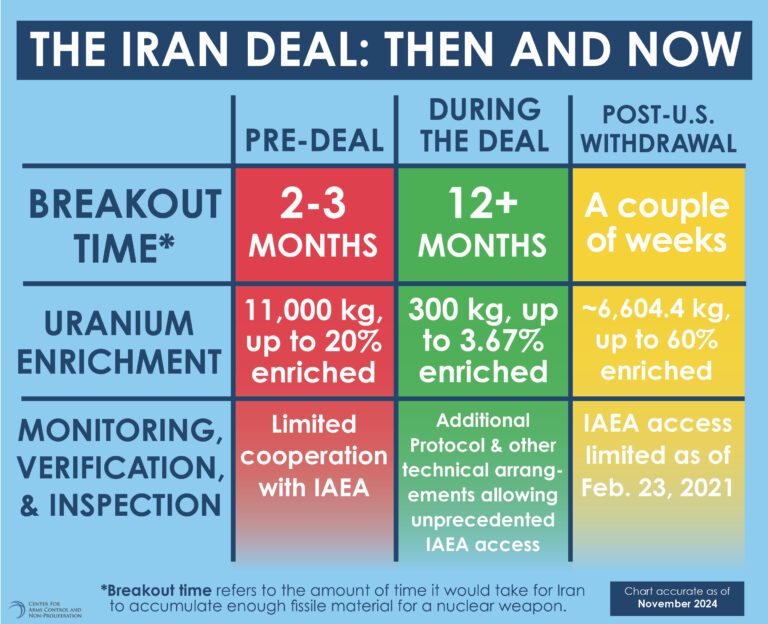
Regrettably, the European Commission’s blocking statute was not enough to keep Iran from withdrawing from the JCPOA. By 2025, the IAEA reported that Iran had sharply increased its stockpile of uranium enriched to 60% purity, just below weapons-grade, and during nuclear negotiations with the representatives of President Trump, Steve Witkoff and Jared Kushner, Iran admitted it had enough enriched uranium for 11 nuclear bombs.
It was during these nuclear negotiations, on June 22, 2025, that President Trump took the second illogical step to creating the current too-big-to-fail-in-not-ending-it scenario. Literally, while good faith negotiations with Iran were going on to end Iran’s nuclear development program, President Trump, after committing to taking no military actions while negotiations were taking place, decided to bomb 3 nuclear facilities in Iran, demonstrating to Iran for a second time that President Trump would not abide by any American agreement. Following the bomb strikes, President Trump falsely claimed, “Iran’s key nuclear enrichment facilities have been completely and totally obliterated”.
Since President Trump’s obliteration claim was false, Iran’s representatives and President Trump’s representatives, Witkoff and Kushner, returned to negotiations 8 months later in February 2026 to negotiate ending Iran’s nuclear development program. Just as he had done before, while negotiations were literally taking place to end Iran’s nuclear program, President Trump took the final step that created America’s current too-big-to-fail-in-not-ending-it when he dishonestly decided this time not to just order a few bomb strikes on Iran; this time he insanely decided to launch Operation Epic Fury, a war of choice with Iran on February 28, 2026.
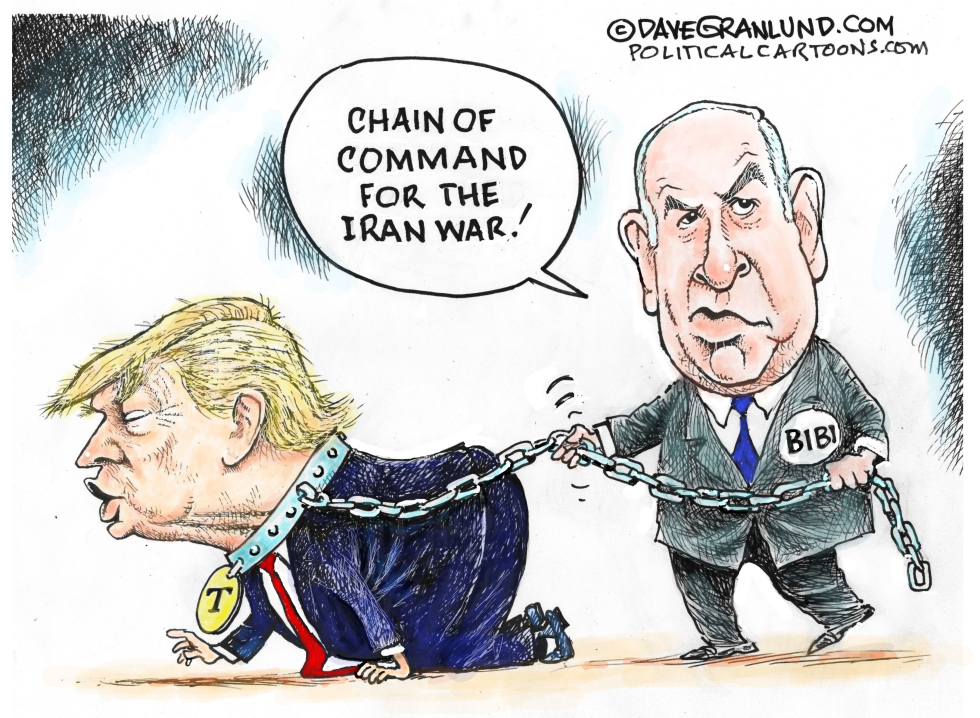
By deceptively not abiding by an American agreement for the 3rd time and starting a war of choice with Iran, President Trump produced 3 death knells that will permanently prevent him from ever successfully negotiating a nuclear deal with Iran:
1) He obliterated all of Iran’s trust in any commitment President Trump would make on behalf of America. Iran’s new Supreme Leader, Mojtaba Khamenei, said President Trump’s signature on the now-defunct memorandum of understanding was “utterly worthless and devoid of credibility”.
2) In the opening salvo of President Trump’s ill-fated Iranian war of choice, President Trump caused the death of Ayatollah Ali Khamenei, the Supreme Leader of Iran, Boshra Khamenei, the daughter of the Supreme Leader, her husband Mesbah Bagheri Kani, their daughter and granddaughter of the Supreme Leader Zahra Mohammadi Golpayegani, Zahra Haddad-Adel, the daughter-in-law of the Supreme Leader and wife of Mojtaba Khamenei, the son who succeeded Ayatollah Ali Khamenei as the new Supreme Leader of Iran, and their son whose name was not disclosed. This gave Iran’s new Supreme Leader, along with other Iranian hard-liners, a revenge and hatred motive for never reaching any deal with President Trump.
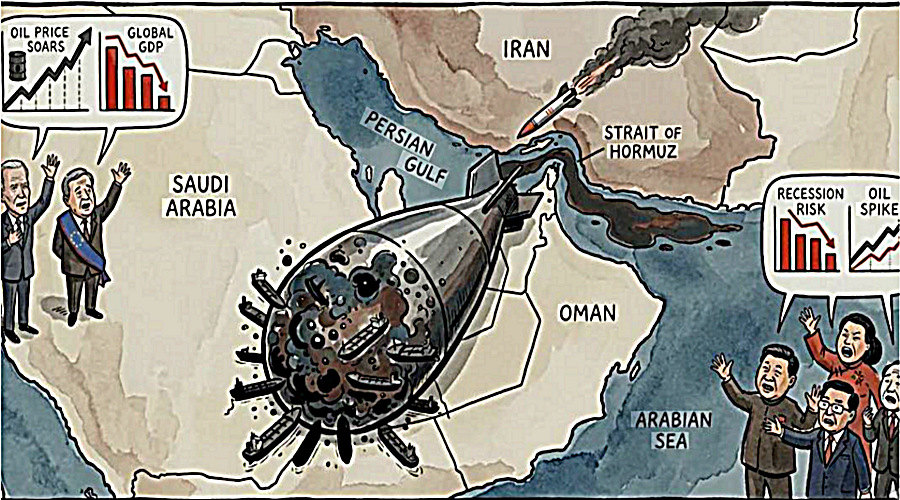
3) President Trump starting a war of choice with Iran has enabled Iran to discover a new economic weapon that is just as powerful as dropping a nuclear bomb: shutting down the Strait of Hormuz.
Iran having a nuclear weapon, combined with its ability to shut down the Strait of Hormuz anytime it chooses to, is the ultimate too-big-to-fail-in-not-ending-it scenario America must succeed at putting an end to one way or the other.
Unfortunately, the reality is that President Trump’s consistent dishonesty with American citizens, America’s allies, and Iran. And his consistent bullying of, and insults to, America’s allies most likely means America has to maintain, alone, its naval blockade of Iran along with occasional bomb strikes against Iran’s nuclear program until 2029, when Donald Trump is no longer President. Because Donald Trump, as President of the United States, has lost the trust, credibility, and respect needed for Iran to believe that any agreement reached with America would be reliable, and for President Trump to assemble the international military and economic coalition necessary to shut down Iran’s nuclear weapons program, or permanently prevent Iran from using the Strait of Hormuz as a new economic weapon.
Any Democrats or Republicans who allow their political opposition to President Trump to cloud their judgment, and call for an immediate end to the blockade and occasional bomb strikes, without an end to Iran’s nuclear program or an end to Iran’s attempt to control ship traffic through the Strait of Hormuz, are acting just as reckless and irresponsible as President Trump was when he started his war of choice with Iran.
The Strait of Hormuz is the ultimate energy lifeline to the world. It is the only sea passage connecting the oil-rich Persian Gulf to the open ocean. Iran is not the only country that relies on it to export its crude oil and liquid natural gas to the rest of the world; so do Saudi Arabia, the UAE, Qatar, Kuwait, and Iraq.
There are not sufficient numbers of overland pipelines that could provide alternatives for bypassing the Strait; meaning the free and unobstructed flow of ships to transport important commodities needed by the entire world is an economic necessity. As Iran is now demonstrating by its current shutdown of ships flowing through the Strait, any restriction of ship traffic or complete closure to ship traffic instantly spikes global fuel prices because it disrupts the supply chain to Europe and Asia, creating massive oil and gas shortages there.
Oil and gas aren’t the only commodities needed by the world that ships through the Strait; one-third of the world’s fertilizer supplies flow through the Strait as well as other industrial materials like aluminum, sulfur, and helium. It’s solely President Trump’s fault that Iran is now using the Strait as an economic weapon that’s reeking economic turmoil, not only on the United States but the entire world.
Putting troops on the ground in Iran is not necessary to restore the free flow of ship traffic, but maintaining a naval blockade and the immense economic pressure it inflicts on Iran is. It’s a clear economic message to Iran that if Iran won’t allow the world to have the free flow of ship traffic through the Strait, which relieves the economic pressure on the world, then America will not allow the free flow of ship traffic through the Strait that relieves the economic pressure on Iran.
The admonition that former Secretary of State Colin Powell said to former President George Bush (43) before the Iraq War: “You break it, you own it”, informally known as the Pottery Barn Rule, applies here. President Trump broke the free flow of ship traffic through the Strait of Hormuz; now America owns it and must fix it by restoring the free flow of ship traffic through the Strait of Hormuz. Finally, Iran can never be trusted to have a nuclear weapon; while consistent, occasional targeted bomb strikes on nuclear facilities won’t permanently stop Iran from possessing a nuclear weapon, they can permanently delay Iran from acquiring one.
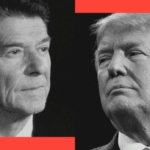
America must accept the fact and lock down for a long, hard slog with Iran until 2029. Just as Iran refused to reach a deal in 1980 to release the American hostages it held with former President Jimmy Carter, because of the wrong Iran felt Carter had done to them, and would only release the hostages to the new President of the United States in 1981, Ronald Reagan. Iran will never reach a deal with President Trump to end its nuclear program, or to permanently reopen the Strait of Hormuz to the free flow of ship traffic, because of the wrong Iran feels President Trump has done to it.
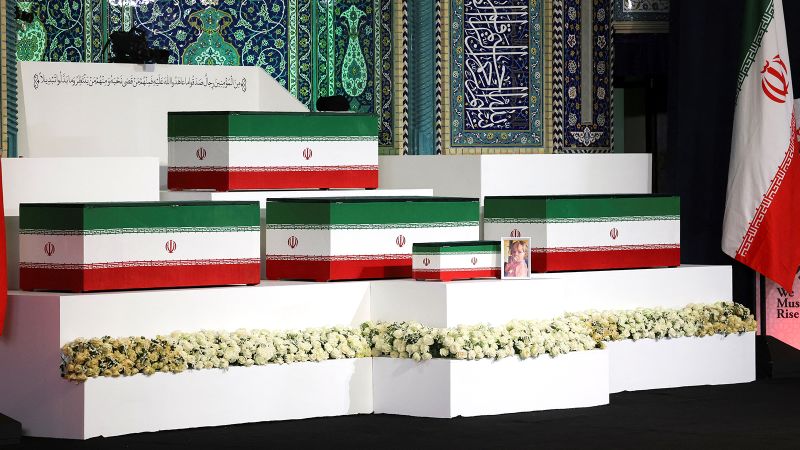
These are the 5 caskets of the murdered Supreme Leader, his daughter, son-in-law, daughter-in-law, and infant granddaughter
So America must prepare for a permanent naval blockade of the Strait of Hormuz until 2029; until then, the spike in the price of oil and natural gas, which the blockade will create, can be mitigated by America sharing its vast supply of oil and natural gas with the world, excluding Iran, to prevent oil and gas shortages. America must also prepare to commit consistent bomb strikes on Iran’s nuclear facilities until 2029; the drain on military resources, which the bomb strikes will create, can be mitigated by the American military limiting bomb strikes to Iran’s nuclear facilities only when necessary to delay the enrichment of uranium. Thanks to President Trump insanely creating a too-big-to-fail-in-not-ending-it scenario, this is the fate of the United States until 2029, when he is no longer President!!!
Leave a Reply